People often use the terms "wheel" and "caster" interchangeably. However, anyone building, repairing, or designing equipment knows that these two components are entirely different. Understanding the distinction between a wheel and a caster will save you time, money, and frustration when selecting mobility solutions for your projects.
Whether you are designing medical equipment, upgrading warehouse carts, or building custom furniture, you need to know exactly what goes on the bottom of your gear. This guide will break down the mechanical differences, explore their unique applications, and help you make the right choice for your specific needs.
What is a Wheel?
A wheel is a solid, circular object that rotates on an axle. It is one of the most fundamental mechanical inventions in human history. By itself, a wheel cannot do much. It requires an axle and a frame or housing to mount to an object.
Wheels come in various materials, sizes, and tread types. You can find them made of solid rubber, polyurethane, cast iron, nylon, and plastic. The primary function of a wheel is to reduce friction between an object and the ground, allowing for forward and backward movement.
However, a standalone wheel has a major limitation: it lacks a built-in mounting mechanism. You cannot attach a raw wheel directly to a cart or a table without additional hardware. You must engineer an axle and a frame to hold it in place.
What is a Caster?
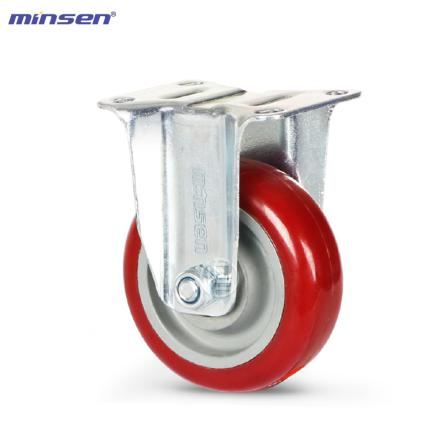
A caster is a complete mobility assembly. It includes a wheel, but it also features the mounting bracket (often called a rig or fork) and the axle that holds the wheel in place. When you buy Casters, you are getting a ready-to-install unit that bolts, screws, or inserts directly into your equipment.
The bracket is the defining feature of a caster. It houses the wheel and provides the mechanism for attaching the unit to your cart, chair, or machinery. This integration makes casters incredibly versatile and easy to install across countless industries.
The Two Main Types of Casters
Casters generally fall into two primary categories based on how they move:
1. Rigid Casters
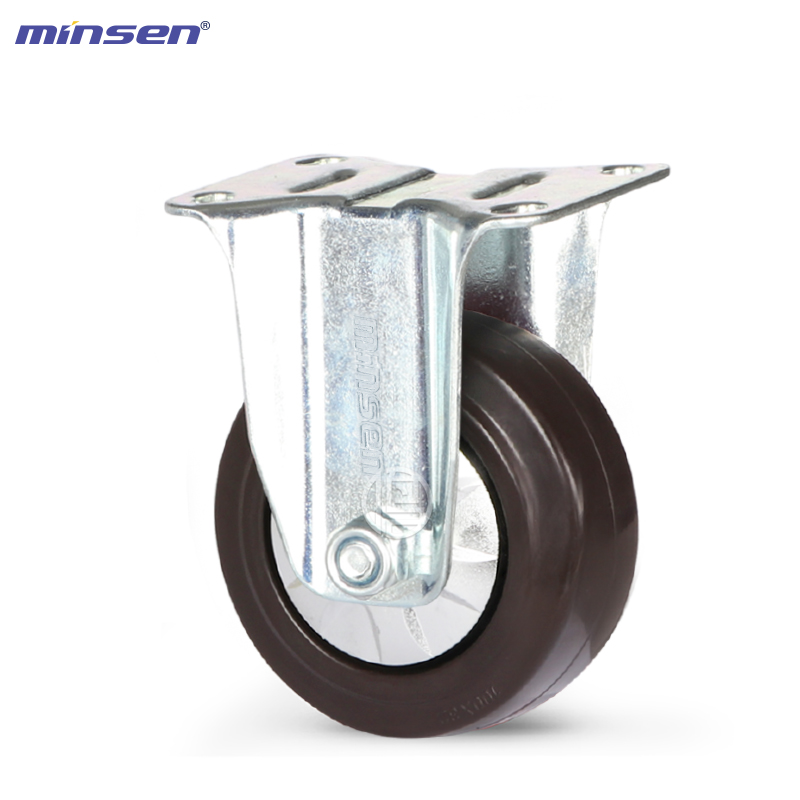
Rigid casters, also known as fixed casters, only move in a straight line. The wheel is mounted in a fixed bracket that cannot steer. These provide excellent stability and are perfect for keeping equipment moving in a predictable, straight path.
2. Swivel Casters
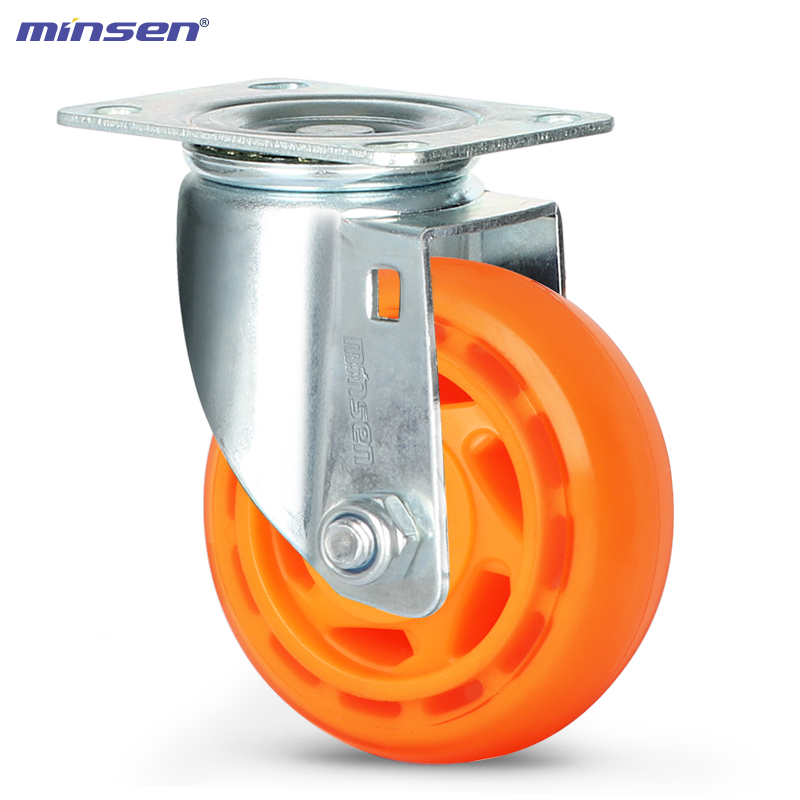
Swivel casters feature a raceway—a swivel bearing mechanism above the bracket—that allows the wheel to rotate a full 360 degrees. This design allows you to steer and maneuver equipment in tight spaces. Most heavy machinery and material handling carts use a combination of rigid and swivel casters to balance steering control with straight-line tracking.
Key Differences: A Side-by-Side Comparison
To make the distinction perfectly clear, we can compare these components across several critical factors. Below is a breakdown of how wheels and casters stack up against each other.
Feature | Wheel | Caster |
Definition | A round object that rotates on an axle. | A complete assembly including a wheel, bracket, and mount. |
Mobility | Rotates forward and backward on a fixed axle. | Can move forward/backward (rigid) or 360 degrees (swivel). |
Installation | Requires custom axles and framing to install. | Ready to mount directly via top plate or stem. |
Load Capacity | Depends strictly on the wheel material and core. | Depends on the combined strength of the wheel and the metal bracket. |
Typical Applications | Axle-driven vehicles, wheelbarrows, custom machinery. | Office chairs, warehouse carts, hospital beds, industrial racks. |
Material Matters: Selecting the Right Components
Whether you are looking at an isolated wheel or a full caster assembly, the material of the rolling surface dictates how it performs. Choosing the wrong material can damage your floors, make carts impossible to push, or cause the unit to fail under load.
When you need to move massive amounts of weight in an industrial setting, you must look at the strength of the entire assembly. For instance, heavy duty casters often utilize forged steel brackets and thick polyurethane or cast-iron wheels to support thousands of pounds safely. The bracket must be just as strong as the wheel itself to prevent structural failure.
Conversely, if you need a quiet, floor-safe option for hospitals, schools, or offices, you should pay close attention to the tread material. Equipment in these environments often utilizes tpr wheels (Thermoplastic Rubber). TPR provides a soft, cushioned ride that absorbs shock, rejects floor debris, and leaves absolutely no scuff marks on sensitive flooring.
Common Wheel Materials Inside Casters
Polyurethane: Excellent all-around material. It protects floors while offering high load capacities and resistance to chemicals.
Rubber: Great for shock absorption and quiet rolling, though generally handles lighter loads than polyurethane.
Nylon/Plastic: Highly durable, resistant to water and chemicals, and very easy to roll. Best for smooth, hard floors.
Steel/Cast Iron: Built for extreme weights in rugged environments. They can damage soft floors but offer unmatched durability.
Choosing the Right Option for Your Needs
How do you know which component you actually need?
If you are replacing a damaged part on a hand truck, a lawnmower, or a custom-built axle system, you likely just need a wheel. You already have the axle and the frame; you just need the rolling component.
If you are adding mobility to a stationary object—like a workbench, a toolbox, or a wooden cabinet—you absolutely need a caster. You need the mounting plate to bolt into the bottom of the furniture, and you need the bracket to hold the wheel securely in place.
Things to Consider Before Buying
Assess the Weight: Calculate the total weight of your equipment, plus the maximum load it will carry. Divide that total by the number of casters you plan to use. This gives you the required load capacity per caster.
Evaluate the Floor: Hard wheels work best on soft floors (like carpet), while soft wheels work best on hard floors (like concrete or tile).
Determine Maneuverability: Do you need to navigate tight corners? Use swivel casters. Do you need to push a cart down a long, straight hallway? Incorporate rigid casters for better tracking.
Conclusion
The difference between a caster and a wheel comes down to the mounting assembly. A wheel is simply a round component that spins on an axle, while a caster is a complete, ready-to-mount unit that includes the wheel, the axle, and the mounting bracket.
By understanding this fundamental difference, you can source the correct parts for your material handling needs, ensuring your equipment rolls smoothly, safely, and efficiently. Always take the time to evaluate your load capacity requirements, flooring conditions, and steering needs before making your final selection.