Selecting the correct caster for your equipment goes far beyond just finding a wheel that rolls. Making the wrong choice can lead to damaged floors, workplace injuries, equipment failure, and significant financial loss. On the flip side, installing the perfect caster guarantees smooth movement, protects your flooring, and extends the lifespan of your valuable equipment.
Whether you are upgrading a heavy-duty industrial cart, retrofitting hospital beds, or building mobile workstations, the sheer variety of wheels on the market can feel overwhelming. You have to consider weight capacities, wheel materials, bearing types, and mounting options.
This guide breaks down exactly what you need to know to make an informed decision. We will explore how to calculate load limits, assess your environment, and select materials that suit your specific mobility needs.
Determine Your Load Capacity
The absolute most critical factor in choosing a caster is load capacity. You must know the total weight your wheels need to support. This includes both the weight of the cart or equipment itself and the maximum payload it will carry.
To determine the required capacity per caster, you cannot simply divide the total weight by four. Floors are rarely perfectly flat. Often, equipment will hit a bump, crack, or debris, causing the entire load to rest on just three wheels.
Use this simple formula:
(Weight of Equipment + Maximum Load Weight) ÷ 3 = Required Capacity Per Caster
If your cart weighs 200 pounds and you plan to carry up to 1,000 pounds of materials, your total weight is 1,200 pounds. Dividing that by three gives you 400 pounds. You need to select casters rated for at least 400 pounds each to ensure a safe operating margin. Always overestimate your load to account for sudden impacts and uneven weight distribution.
Assess Your Floor Conditions
The surface you plan to roll your equipment across dictates the material of your wheel. A fundamental rule of thumb in the industry is that hard wheels belong on soft floors, and soft wheels belong on hard floors.
If you operate on smooth surfaces like hardwood, tile, or linoleum, hard metal or hard plastic wheels will scratch and ruin the finish. You need a softer, forgiving material that provides excellent floor protection and quiet operation. For these environments, tpr casters (Thermoplastic Rubber) offer incredible grip, reject floor debris, and roll silently without leaving scuff marks behind.
Conversely, if your equipment operates on carpet or rough outdoor terrain, a harder wheel like nylon, cast iron, or hard polyurethane will roll much easier with less friction.
Consider the Operating Environment
Where will your equipment live? Temperature extremes, moisture, and chemical exposure severely impact how long your wheels will last.
If your carts operate in cold storage facilities or commercial ovens, you must select wheels and bearings rated for extreme temperature fluctuations. Standard plastics will shatter in freezing environments, while certain rubbers will melt under high heat. High-temperature resins or specialized metal wheels work best for hot environments.
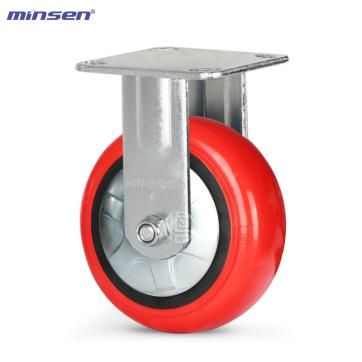
For wet conditions, wash-down areas, or facilities using harsh cleaning chemicals, corrosion resistance is essential. Stainless steel rigs combined with a durable caster wheel rubber or solid polyurethane stand up incredibly well to moisture, oils, and chemical spills without degrading or rusting over time.
Understand Maneuverability Needs
How your equipment moves is just as important as how much it holds. You need to decide between swivel casters, rigid casters, or a combination of both.
Rigid Casters: These wheels only roll in a straight line. They are excellent for long-distance travel and keeping heavy carts tracking straight down narrow aisles.
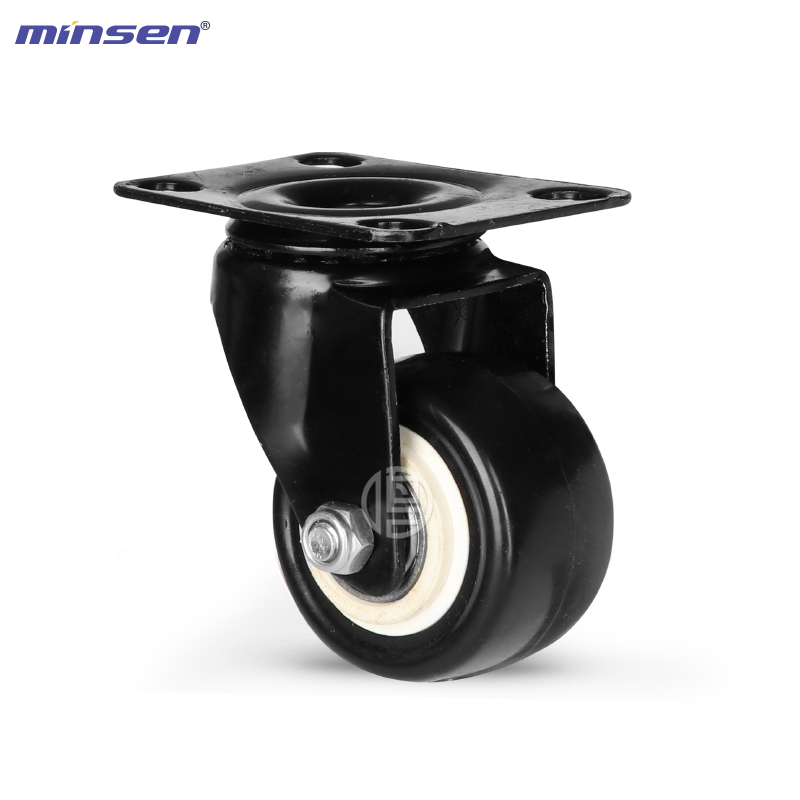
Swivel Casters: These rotate a full 360 degrees, allowing for instant directional changes and tight cornering.
Most standard material handling carts use two rigid casters in the back and two swivel casters in the front. This classic setup allows for easy steering while maintaining straight-line control. If you need a cart to move completely sideways into tight spaces, four swivel casters provide maximum maneuverability, though they can be harder to push in a straight line over long distances.
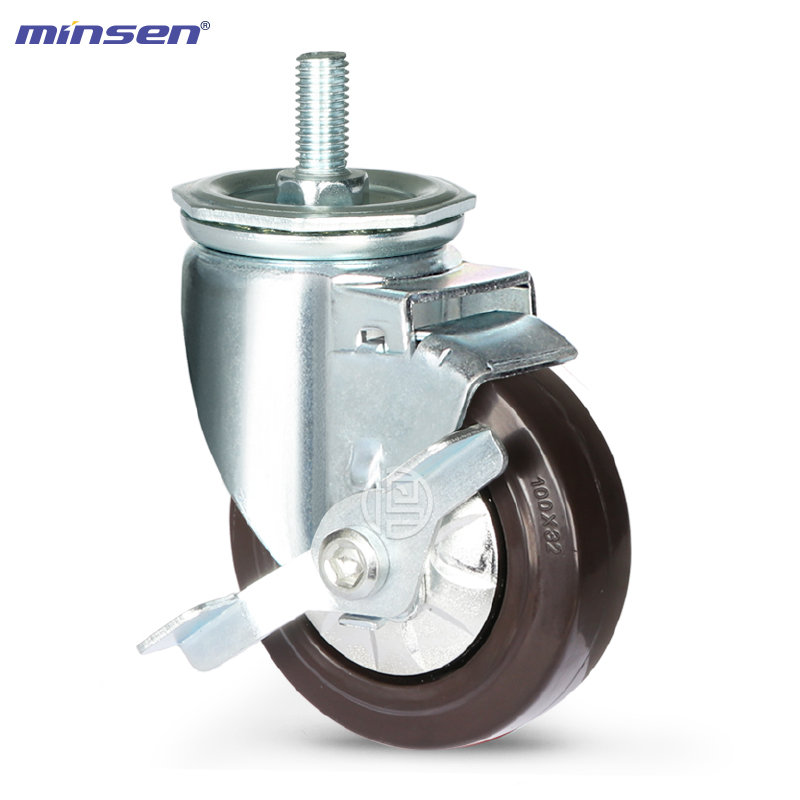
Do not forget about brakes. If your equipment needs to remain stationary during use, ensure your swivel casters come equipped with top-lock or total-lock braking mechanisms.
Quick Reference: Caster Material Guide
To help you compare the different options quickly, use the table below to match common wheel materials with their best use cases.
Wheel Material | Floor Protection | Noise Level | Ideal Operating Environment | Key Benefit |
Polyurethane | High | Low | Warehouses, Retail, Factories | High capacity, rejects floor debris, resists wear |
Thermoplastic Rubber (TPR) | Excellent | Very Low | Hospitals, Schools, Offices | Non-marking, shock absorbing, silent operation |
Nylon | Low | High | Wet environments, Meat packing | Highly resistant to chemicals, oils, and water |
Cast Iron / Steel | Very Low | Very High | Heavy manufacturing, Foundries | Maximum load capacity, extreme durability |
Pneumatic | Excellent | Low | Outdoors, Rough terrain, Gravel | Absorbs severe shock, rolls over large obstacles |
Matching the Right Mounting Type
You also need to securely attach the caster to your equipment. The mounting type heavily influences structural integrity.
Plate Mounts: These feature a flat metal plate with four bolt holes. Plate mounts distribute weight over a larger surface area, making them the standard choice for heavy-duty applications.
Stem Mounts: These use a single metal rod (stem) inserted into a tube or socket on the equipment. They are common on office chairs, medical carts, and scaffolding. Stems come in various styles, including threaded, grip ring, and expanding adapters.
Always double-check your existing mounting measurements before ordering replacements. A slight mismatch in bolt hole patterns or stem diameter will make installation impossible.
Evaluating Ergonomics and Rolling Resistance
Pushing heavy carts causes physical strain, leading to operator fatigue and potential workplace injuries. If your team frequently pushes heavy loads, ergonomics must play a major role in your selection process.
Wheel diameter directly impacts push/pull force. Simply put, larger wheels roll easier. They navigate over thresholds, extension cords, and floor gaps much better than small wheels. If you have the clearance for it, always choose a larger wheel diameter to reduce physical strain on the operator.
Additionally, precision ball bearings inside the wheel core drastically reduce rolling friction compared to basic roller bearings or plain bores. When you need heavy equipment to start rolling smoothly, high-quality commercial caster wheels equipped with precision bearings provide the lowest starting and rolling resistance available.
Making the Final Decision
Choosing the right caster involves balancing load requirements, floor protection, environmental factors, and ease of use. Take the time to walk through your facility and observe how your equipment operates. Notice the condition of your floors, ask your employees about the carts they push daily, and check for signs of premature wear on your current wheels.
By applying the principles in this guide, you can eliminate guesswork and ensure your equipment rolls safely and efficiently for years to come.