


English
Views: 0 Author: Site Editor Publish Time: 2026-05-07 Origin: Site


TL;DR: The right material handling equipment reduces physical strain and improves warehouse efficiency. Facility managers should select equipment based on payload capacity, wheel material, and environmental conditions. Choose heavy-duty steel frames for massive payloads, and opt for thermoplastic rubber casters to protect indoor concrete floors from scratching.
Moving heavy materials across a busy warehouse floor requires more than just muscle. Facility managers constantly seek ways to improve operational efficiency while keeping workers safe from lifting injuries. Selecting the correct mobility solutions drastically reduces workplace accidents and streamlines the entire logistics process.
When a factory upgrades its transport mechanisms, productivity naturally increases. Workers spend less time struggling with awkward loads and more time focusing on high-value tasks. Understanding the mechanics and features of different mobility options helps organizations make smart purchasing decisions that yield long-term benefits.
This guide explores the essential criteria for selecting the best equipment for your specific facility needs. You will discover the differences between various mobility aids, learn how to evaluate payload capacities, and see why choosing the proper caster wheel matters.

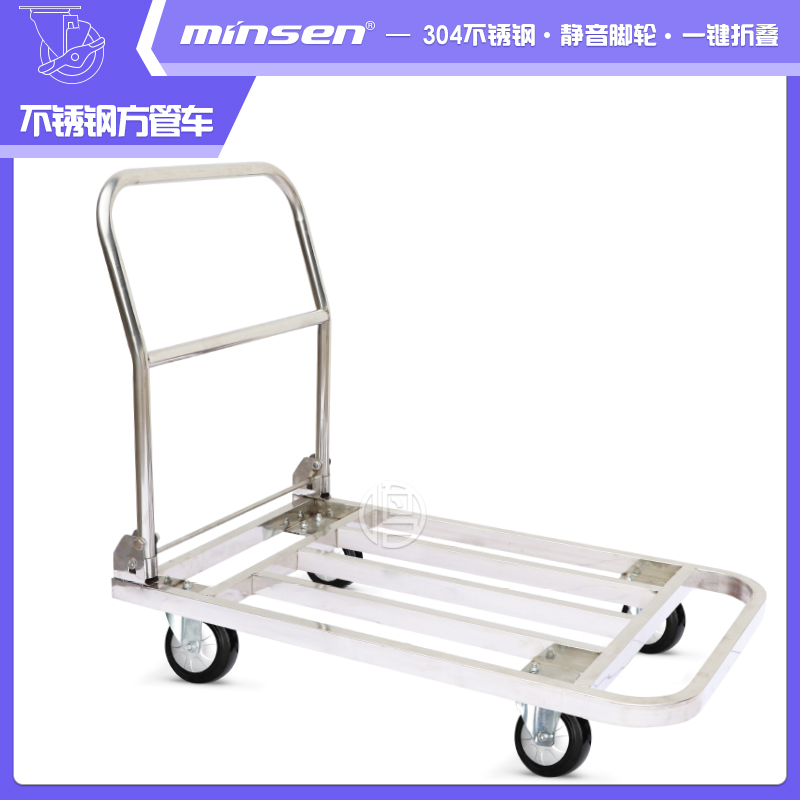
Selecting reliable transport mechanisms involves assessing the weight of the items you move daily. Facilities handling massive engine parts require vastly different equipment than those moving lightweight cardboard boxes. According to safety experts, matching the load capacity of your equipment to the actual weight of your goods prevents structural failures.
When outfitting a manufacturing plant, investing in premium industrial trolleys ensures that workers can transport heavy loads safely. Minsen, a leading manufacturer based in Kaiping City, operates an 8,000-square-meter facility dedicated to producing mobility solutions designed to withstand rigorous daily use. By utilizing advanced hardware stamping and large injection molding equipment, manufacturers can provide customized solutions that meet exact warehouse specifications.
A well-constructed moving cart relies on sturdy frame materials and high-quality casters. Steel frames offer maximum durability for manufacturing environments, while aluminum frames provide a lightweight alternative for commercial spaces. Choose a robust steel frame if maximum weight capacity matters more than maneuverability.
For extremely demanding tasks, a heavy duty hand truck trolley with reinforced welds prevents the frame from bending under pressure. Proper ergonomics also play a crucial role. Carts with adjustable handle heights reduce back strain for operators of varying sizes. Furthermore, integrating features like non-slip decks prevents cargo from shifting during transit, which protects both the inventory and the operator.
Understanding the specific applications of different transport tools helps you allocate resources effectively. Below is a comparison of common mobility equipment.
| Equipment Type | Best Use Case | Typical Load Capacity | Recommended Floor Type |
| Flatbed Platform | Large, bulky boxes | 500 lbs – 2000 lbs | Smooth concrete |
| Two-Wheel Dolly | Tall appliances, stacked crates | 300 lbs – 800 lbs | Variable terrain |
| Assembly Cart | Manufacturing components | 400 lbs – 1000 lbs | Indoor warehouse |
| Medical Cart | Hospital supplies | 100 lbs – 300 lbs | Vinyl or tile floors |
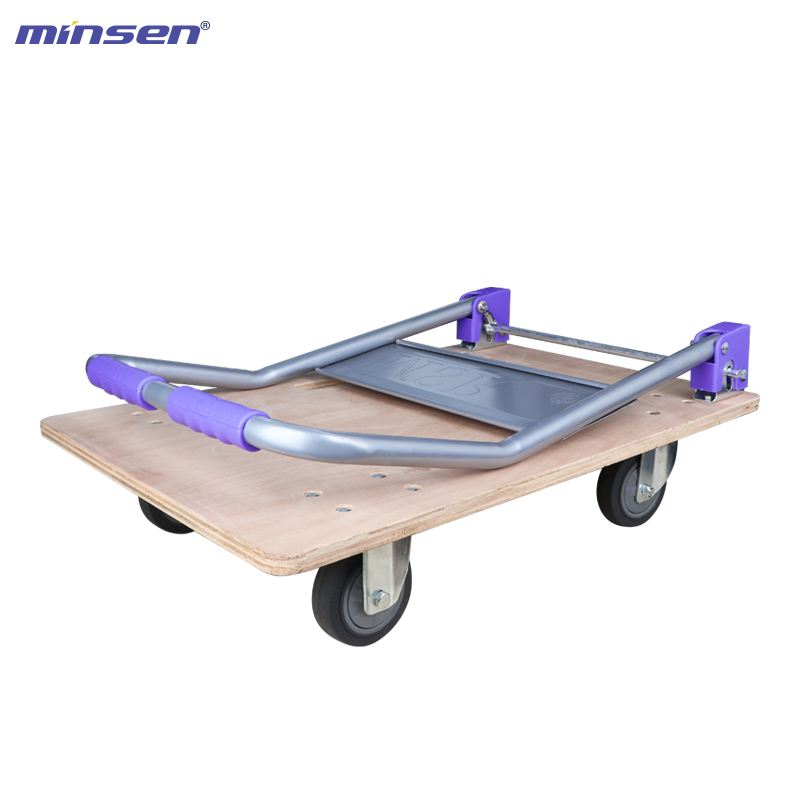
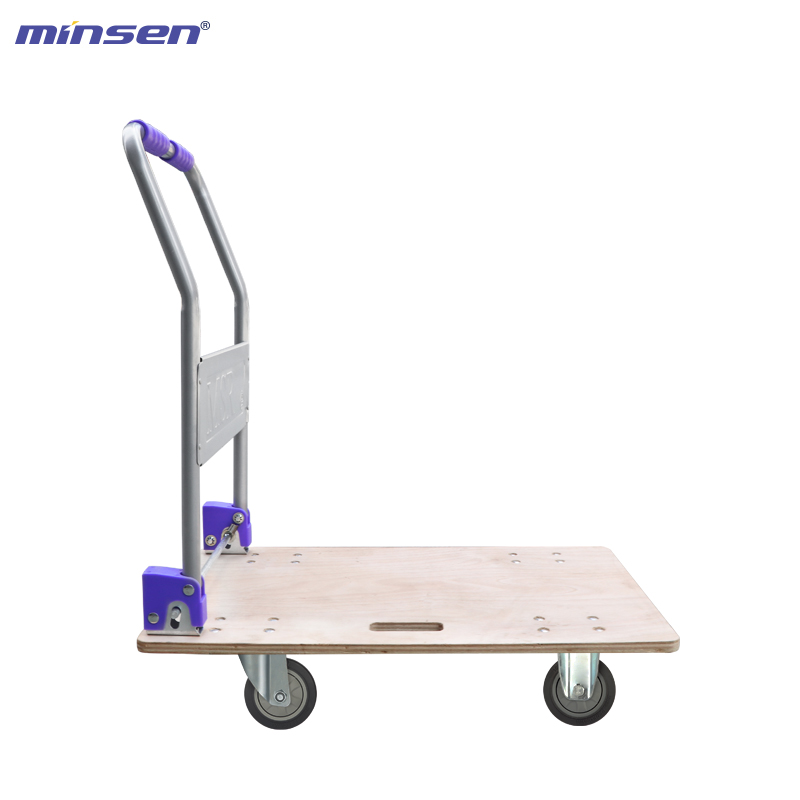
The wheels attached to your equipment dictate how smoothly the unit rolls across different surfaces. Hard wheels, like cast iron or nylon, roll easily on smooth concrete but transmit vibrations to the payload. Soft wheels, such as TPR (Thermoplastic Rubber) or polyurethane, absorb shocks and protect delicate floors from scratches.
If you frequently move items across thresholds or uneven surfaces, outfitting your hand truck trolley with shock-absorbing casters is highly recommended. Environmental factors also dictate wheel choice. High-temperature manufacturing environments require specialized heat-resistant wheels. For example, Minsen produces heavy-duty dual-axis flat casters engineered to withstand extreme temperatures between 230°C and 310°C.
Upgrading your warehouse mobility solutions directly impacts both worker safety and daily output. By carefully evaluating load requirements, frame construction, and caster materials, you can eliminate bottlenecks in your material handling process.
Remember to inspect your transport equipment regularly and replace worn-out wheels before they cause workplace accidents. Reach out to mobility experts to discuss customized solutions that fit the exact dimensions and demands of your facility. Implementing the right equipment today builds a safer, more efficient workflow for tomorrow.
A well-maintained transport cart typically lasts five to ten years in a standard warehouse environment. Routine maintenance, such as lubricating bearings and replacing damaged casters, significantly extends this operational lifespan.
Choose polyurethane wheels for smooth, indoor concrete floors where noise reduction is important. Opt for pneumatic or heavy-duty rubber wheels if you need to navigate outdoor terrain or uneven surfaces. Select high-temperature resin wheels for baking or industrial heating applications.
Yes. Leading mobility manufacturers offer OEM services and custom design consultations. They can adjust frame dimensions, load capacities, and wheel types to match the unique industrial requirements of your facility.


