TL;DR:
Choosing the right heavy duty casters for factory environments requires evaluating load capacity, wheel material, floor surface compatibility, and environmental conditions. Casters rated for at least 20–30% above your actual load are the safest choice. MINSEN Casters, a manufacturer with over 10 years of industrial experience, offers a full range of heavy duty options to meet diverse factory demands.
Factory floors are unforgiving. Rough surfaces, chemical spills, extreme temperatures, and constant movement create conditions that quickly expose the weaknesses of inferior caster wheels. Choose the wrong product, and you're looking at damaged floors, broken equipment, and safety hazards. Choose the right ones, and your operations run smoothly for years.
This guide covers everything factory managers and procurement teams need to know—from load ratings and wheel materials to floor compatibility and supplier selection—so you can make a confident, well-informed purchase.
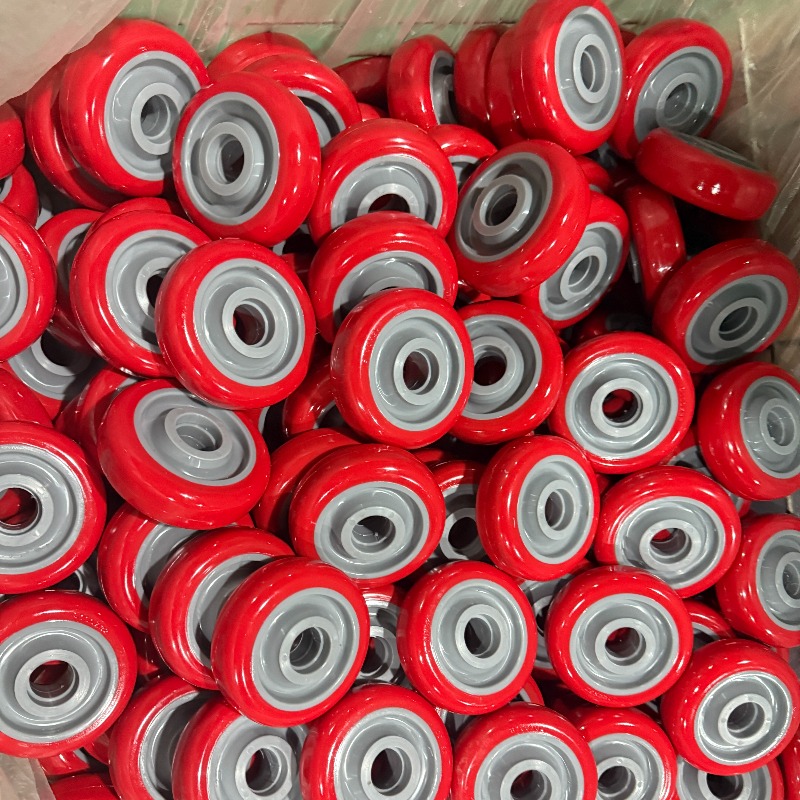
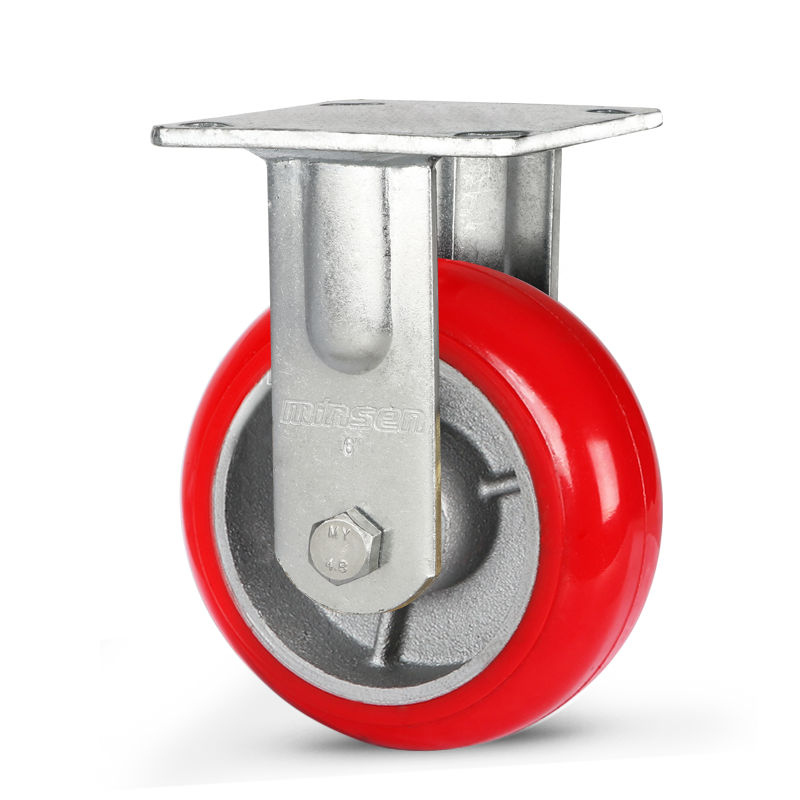
What Makes a Caster "Heavy Duty" in a Factory Setting?
The term "heavy duty" gets used loosely in product listings. In factory contexts, it generally refers to casters capable of supporting loads between 500 lbs and 2,000+ lbs per wheel, depending on the application. But raw load capacity isn't the only defining factor.
True heavy duty industrial casters are built with reinforced mounting plates, hardened steel axles, precision ball bearings, and wheel materials engineered for specific floor types. They also account for dynamic versus static load—the difference between weight at rest and weight in motion. A caster rated for 1,000 lbs static might only safely handle 700–800 lbs under movement.
When evaluating the best heavy duty casters for factory environments, look beyond the headline weight rating. Construction quality, bearing type, and material durability determine how that rating holds up over time.
How Do You Calculate the Right Load Capacity for Factory Casters?
Getting the load math right is non-negotiable. Undersized casters fail prematurely—and failure mid-operation creates serious safety risks.
The standard calculation used by most engineers:
Required capacity per caster = (Total load weight ÷ number of wheels) × 1.25–1.35 safety factor
For a 4-wheel cart carrying 3,000 lbs, each caster should be rated for at least 937–1,013 lbs. Most experienced engineers also subtract one caster from the divisor to account for uneven floor surfaces where one wheel may bear disproportionate load at any given moment.
This caster wheel weight capacity guide framework applies across most factory cart and trolley configurations. However, environments with vibration, ramps, or sudden stops require an even higher safety margin—sometimes 1.5× the calculated load.
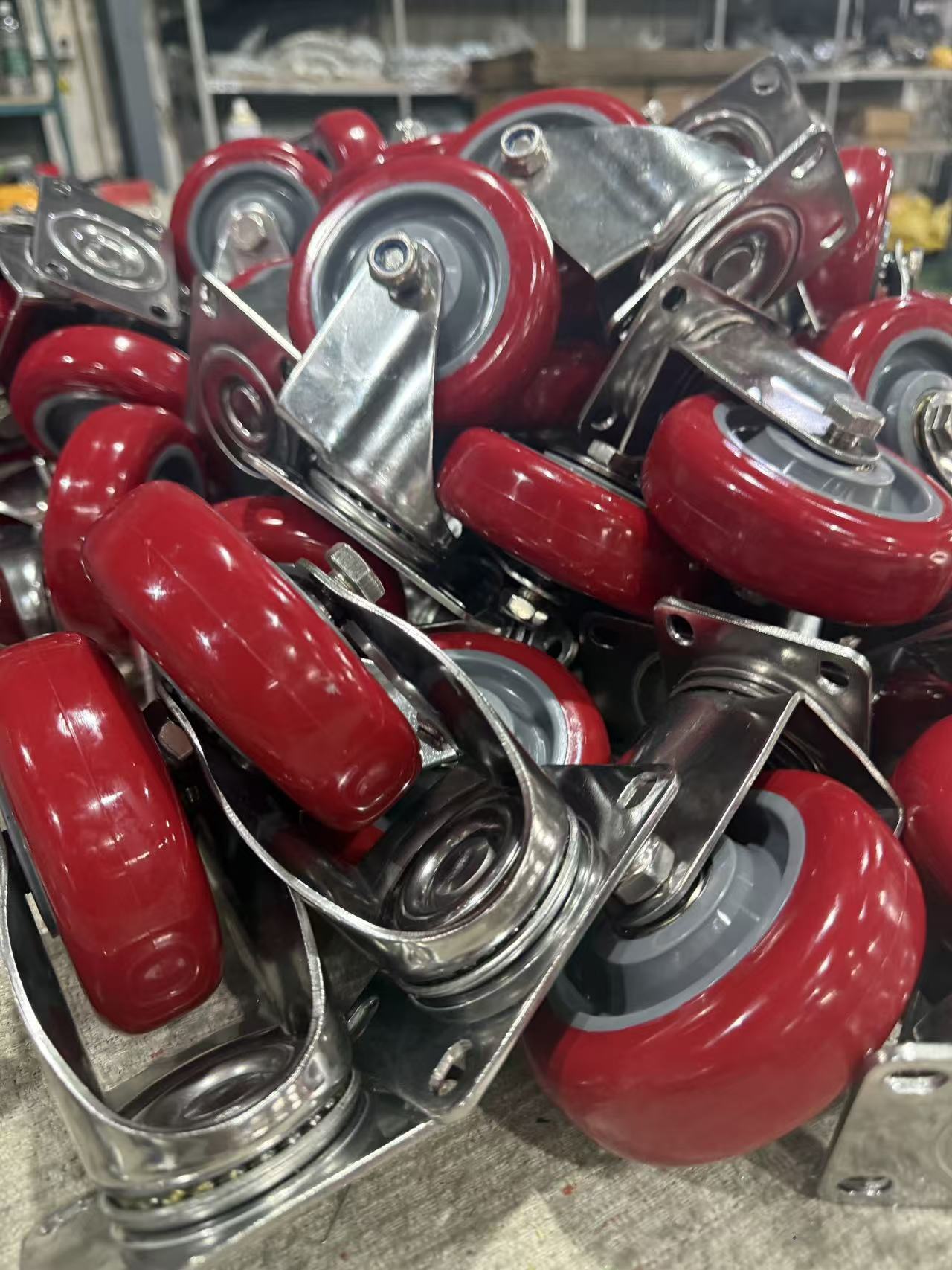
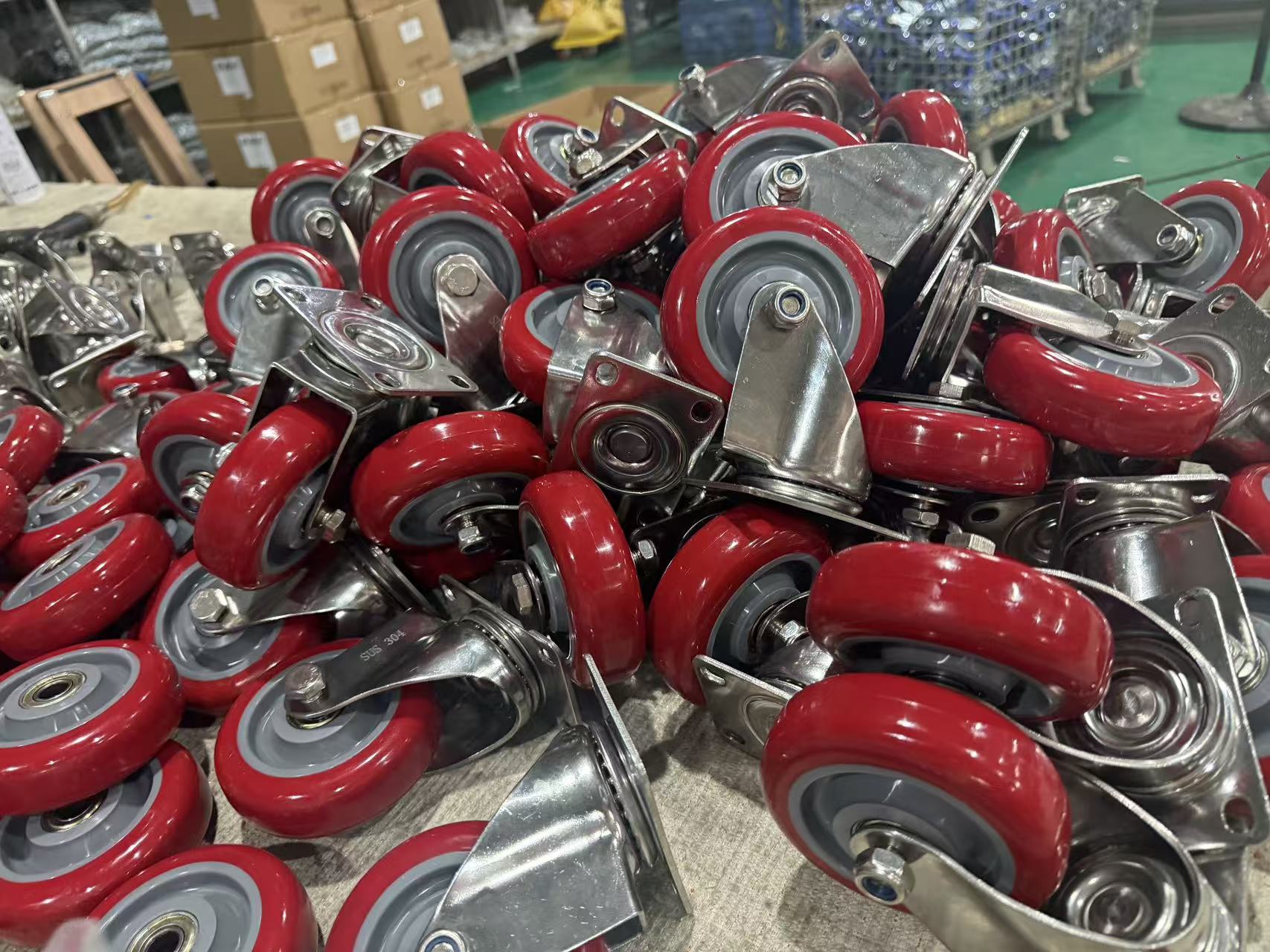
Wheel Material Comparison for Factory Environments
The material your caster wheel is made from affects floor protection, noise level, load capacity, and resistance to chemicals or heat. Here's a quick reference:
Wheel Material | Load Capacity | Floor Friendliness | Heat Resistance | Best Use Case |
Polyurethane (PU) | High | Excellent | Moderate (up to ~80°C) | Warehouses, clean facilities |
Cast Iron | Very High | Poor (can scratch) | High (up to 300°C+) | Foundries, high-temp environments |
Rubber (TPR/TR) | Medium–High | Excellent | Low | Hospitals, retail, light industrial |
Nylon | High | Moderate | Good | Dry industrial, light debris floors |
Steel | Very High | Poor | Very High | Heavy manufacturing, ovens |
Phenolic Resin | High | Moderate | High | Heat-intensive factory floors |
Selecting the right material depends on your specific floor surface, the presence of chemicals or oils, operating temperatures, and whether noise is a concern.
What Environmental Factors Affect Factory Caster Performance?
Temperature is one of the most overlooked variables. Standard PU casters begin to deform above 80°C, making them unsuitable for operations near furnaces, ovens, or autoclaves. MINSEN's high-temperature resistant caster series is rated for environments up to 230°C–310°C, specifically designed for these demanding conditions.
Chemical exposure is equally important. Oils, solvents, and acidic cleaners degrade rubber compounds and corrode standard steel hardware. Stainless steel or chemically resistant nylon casters perform far better in food processing, automotive painting, and pharmaceutical manufacturing environments.
Floor conditions also matter significantly. Uneven surfaces, gaps, and debris call for larger diameter wheels and shock-absorbing designs. MINSEN's shock-absorbing caster series uses spring mechanisms to dampen vibration, protecting both the equipment and the load.
How to Evaluate a Caster Manufacturer Before Purchasing
Understanding how to choose heavy duty caster wheels also means knowing how to vet the supplier behind them. A low-cost caster from an unreliable manufacturer can cost far more in downtime and replacement expenses than a quality unit sourced from an established factory.
Key criteria to assess:
Production capacity and quality control: Look for manufacturers with in-house stamping, rubber processing, and injection molding—not assembly-only operations.
Certifications and testing standards: Reliable suppliers conduct wear resistance, load-bearing, and rotation tests on every product line.
Customization capability: Factory environments often require non-standard bore sizes, bracket types, or wheel dimensions.
After-sales support: Spare parts availability and responsive service matter when equipment goes down unexpectedly.
MINSEN Casters, established in 2010 and operating from an 8,000 m² facility in Kaiping, Guangdong, manufactures its full product range in-house. The company offers OEM and custom order services, covering everything from standard universal casters to specialty series including dual-wheel, scaffold, conductive, and antistatic configurations. Direct factory pricing eliminates middlemen, making it possible to source premium industrial casters at competitive rates.
Matching Caster Type to Factory Application
Not all factory workflows use the same equipment, and caster selection should reflect that.
Assembly lines benefit from low-profile casters with precision swivel bearings for smooth, directional control. Heavy transport carts require rigid rear casters paired with swivel front units for controlled steering. Automated guided vehicles (AGVs) demand extremely tight load tolerances and low rolling resistance.
Storage racks typically use fixed casters or floor locks to prevent movement during loading.
MINSEN's product catalog includes dedicated series for each of these scenarios, including industrial caster series, extra heavy duty series, and floor lock systems that integrate with existing cart designs.
Frequently Asked Questions
What load rating should heavy duty factory casters have?
Heavy duty factory casters typically need load ratings between 500 and 2,000+ lbs per wheel. Always apply a safety factor of 1.25–1.35 to your calculated per-wheel load, and consider increasing this margin in high-vibration or ramp-heavy environments.
What is the difference between swivel and rigid casters for factory use?
Swivel casters rotate 360° and allow directional steering, making them ideal for front wheels on carts. Rigid casters only move in a fixed direction and provide stability, typically used on rear wheels. Most factory carts use a combination of both.
How often should factory casters be inspected or replaced?
In high-use environments, visual inspections should occur weekly. Full maintenance checks—including bearing lubrication, swivel tension, and wheel surface integrity—should happen monthly. Replace casters showing visible deformation, bearing noise, or swivel resistance immediately.
Are stainless steel casters worth the cost for factory environments?
Yes, in chemically aggressive or wet environments. Stainless steel resists corrosion from oils, acids, and cleaning agents far better than standard zinc-plated or painted steel. The higher upfront cost is offset by significantly longer service life.
Can MINSEN produce custom casters for non-standard factory requirements?
Yes. MINSEN Casters accepts OEM and custom orders, accommodating specific size, material, color, and load requirements. The customization process includes requirement communication, material selection, sample production, and quality verification before full-batch manufacturing.
The Right Caster Is a Productivity Decision
Casters are small components with an outsized effect on factory efficiency and safety. Getting the specification right—load capacity, wheel material, environmental resistance, and bearing type—prevents equipment failure, protects floors, and keeps workers safe.
MINSEN Casters offers the product range, manufacturing depth, and customization capability to support factory procurement across diverse industries. With direct factory pricing and a comprehensive lineup spanning universal, specialty, and high-temperature series, MINSEN is a dependable partner for sourcing industrial mobility solutions at scale.
Contact the MINSEN team at sales@mingtaicaster.com to discuss your factory's caster requirements.