TL;DR:
Large caster wheels improve load stability, floor protection, and maneuverability across warehouses and manufacturing environments. Selecting the right wheel diameter, material, and swivel configuration directly reduces equipment wear and workplace injuries. Minsen Casters, a China-based manufacturer with over 15 years of experience, produces a full range of industrial mobility solutions built for demanding commercial and industrial applications.
Casters sit at the bottom of carts, trolleys, and machinery—easy to overlook until something goes wrong. A wheel that's too small for the load causes floor damage. The wrong material leads to premature bearing failure. Poor swivel geometry turns a simple cart push into a two-person job. These aren't minor inconveniences; they compound into real costs through equipment downtime, worker fatigue, and facility damage.
The good news is that most of these problems are avoidable with the right specification. Wheel diameter, load rating, mounting plate configuration, and material selection all play a role. This guide breaks down how each factor affects performance—and how Minsen Casters delivers the solutions that warehouse managers, procurement teams, and facility engineers actually need.
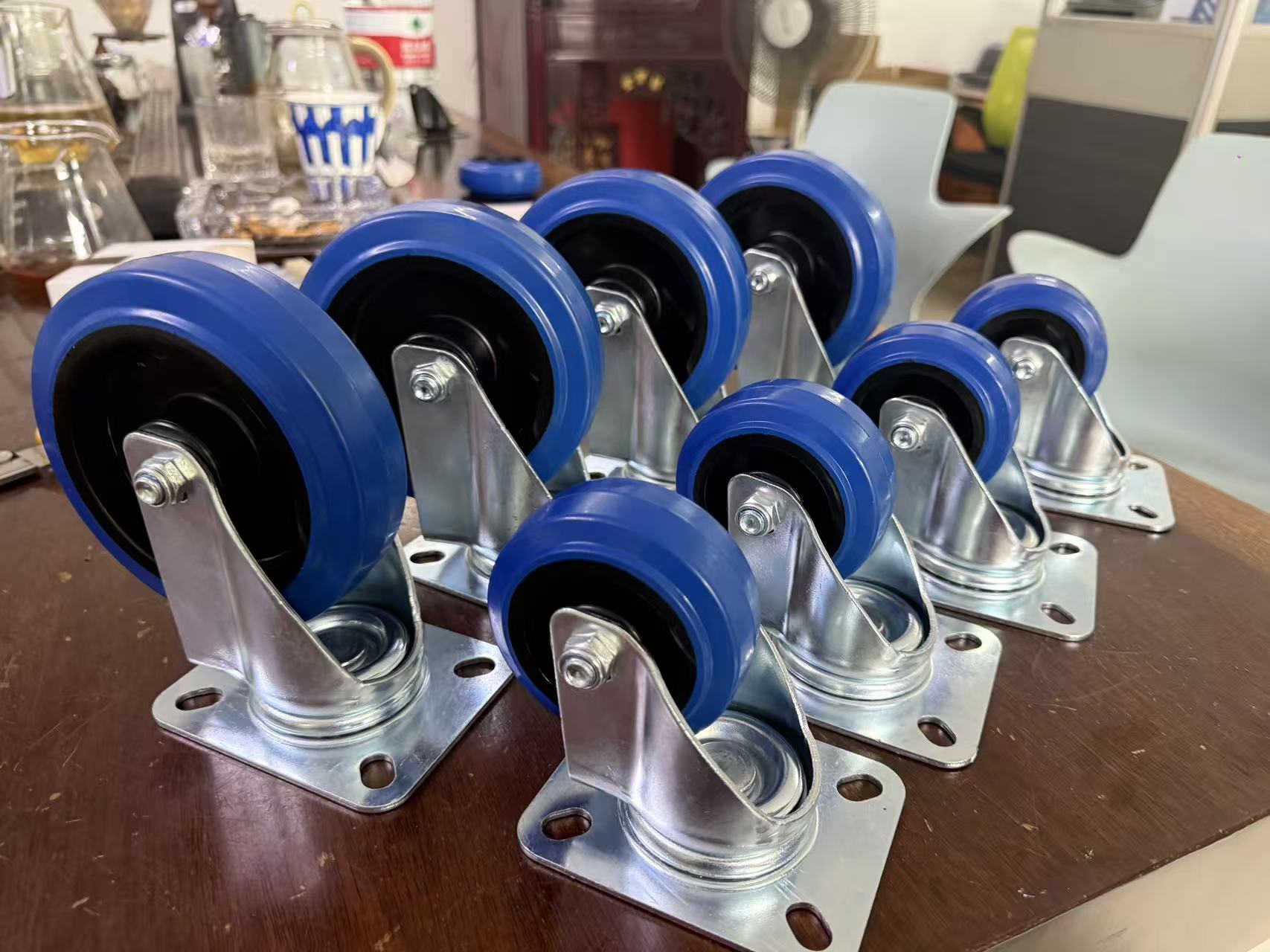
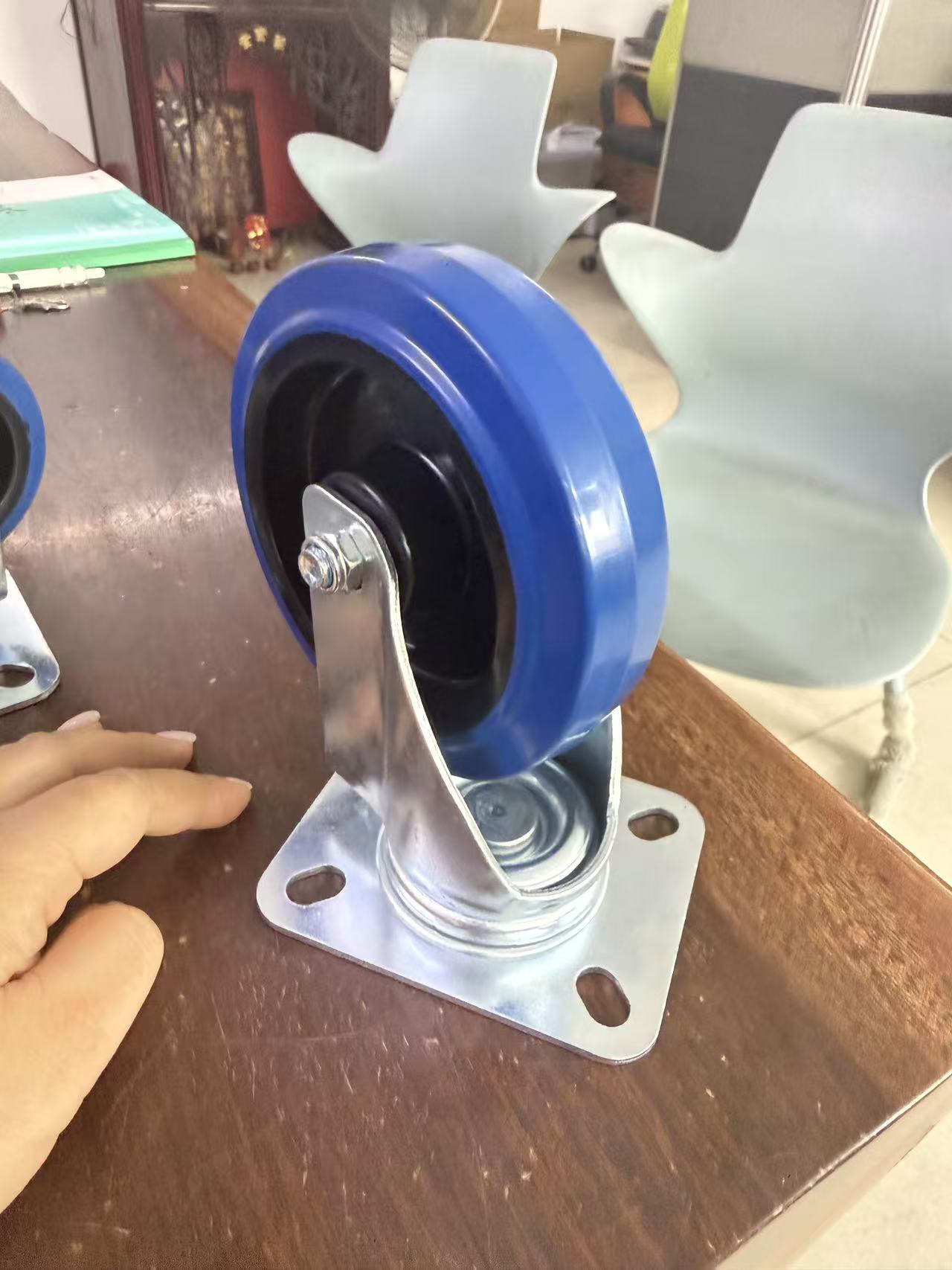
Why wheel diameter has such a large impact on performance
Diameter is the single most influential variable in caster selection, yet it's often treated as an afterthought. Larger wheels distribute weight over a greater contact surface, which reduces point pressure on floor coatings and reduces rolling resistance on uneven terrain.
A 200mm wheel, for instance, rolls over a 10mm floor irregularity with minimal impact force. A 75mm wheel hits that same gap with significantly more jarring force—transmitted directly to the load above and the floor below. Over thousands of cycles per day in a busy facility, this difference accumulates into measurable floor and bearing wear.
Larger wheels also require less effort to get moving from a standing start, which matters in facilities where workers are pushing heavy loads repeatedly throughout a shift. Ergonomics and productivity are directly tied to wheel selection. That's why large caster wheels in the 150mm–250mm range are commonly specified for heavy-duty warehouse carts, assembly line trolleys, and roll pallets.
How swivel geometry affects maneuverability in tight spaces
Directional control is where many caster setups fall short. A rigid (fixed) caster rolls only in one direction, which limits maneuverability. A swivel caster rotates 360°, allowing a cart to be steered around corners, through doorways, and between rack aisles without repositioning.
The critical measurement here is swivel offset—the horizontal distance between the mounting pin and the wheel's center axle. A longer offset makes the wheel trail more predictably behind the direction of travel, similar to the geometry of a shopping cart. Too short, and the wheel becomes unstable at speed. Too long, and steering requires more lateral force.
Specifying the right swivel caster wheels for warehouse environments means accounting for aisle width, load weight, and travel speed. In most warehouse applications, a combination of two swivel casters and two fixed casters provides the optimal balance between directional control and straight-line stability. Adding locking brakes on the swivel units prevents unintended rolling during loading and unloading operations.
Matching caster specifications to machinery requirements
Factory floors present a different set of challenges than warehouse aisles. Machinery moves less frequently but carries far heavier loads—sometimes several tonnes. The operating environment often includes oil, coolant, metal chips, and temperature extremes that would quickly degrade a standard caster.
When selecting industrial caster wheels for machinery, load rating is the starting point. The standard calculation divides total cart weight (including contents) by the number of wheels, then applies a safety factor of at least 1.3 to account for dynamic loading during movement. A cart carrying 2,000kg on four wheels needs casters rated for at least 650kg each—not 500kg.
Material selection matters just as much. Forged steel wheels withstand heavy impacts and high temperatures. Polyurethane (PU) wheels protect sensitive floor surfaces while maintaining high load capacity. Nylon wheels offer chemical resistance. Each material suits a specific environment, and selecting the wrong one shortens service life dramatically.
Caster selection guide by application
Application | Recommended Wheel Diameter | Material | Swivel Type | Key Requirement |
Warehouse trolley | 150–200mm | TPR or PU | Swivel + Fixed | Floor protection, quiet operation |
Assembly line cart | 125–160mm | PU or Nylon | Full swivel | Precision steering, clean rooms |
Heavy machinery | 200–300mm | Forged steel or PU | Fixed or locking swivel | High load capacity |
High-temp environments | 150–250mm | Heat-resistant nylon | Fixed | Temperature tolerance 230°C–310°C |
Hospital/medical carts | 100–150mm | Rubber or PU | Full swivel | Hygiene, quiet, anti-static |
Outdoor use | 200–250mm | Pneumatic or solid rubber | Swivel | Uneven terrain, shock absorption |
What sets Minsen Casters apart from standard suppliers
Kaiping Mingtai Caster Manufacturing Co., Ltd.—operating under the Minsen brand—has manufactured casters and trolleys since 2010 from an 8,000-square-meter factory in Guangdong Province, China. The facility runs full in-house production across hardware stamping, rubber processing, and large-format injection molding, which means quality control is maintained at every stage—from raw material sourcing through final assembly and packaging.
Minsen supplies directly to buyers without intermediary markups. That pricing model makes it possible for procurement teams to access better-quality hardware at the same budget, or maintain quality while reducing per-unit cost. The company supports multi-specification customization (OEM and ODM), which is particularly useful for facilities that operate non-standard cart dimensions or require branded components.
Every caster passes multiple testing cycles covering wear resistance, load-bearing capacity, and rotational smoothness before it leaves the factory. The product range spans light-duty instrument casters through extra-heavy-duty series, medical casters, high-temperature-resistant wheels, antistatic casters, and specialty configurations including scaffold casters, pneumatic wheels, and shock-absorbing series.
For procurement teams comparing suppliers, Minsen's combination of direct-factory pricing, in-house manufacturing capability, and broad product range is worth a closer look. Contact the team at sales@mingtaicaster.com to request specifications or a custom quote.
Frequently asked questions
What wheel size is considered "large" for industrial casters?
In industrial contexts, wheels with a diameter of 150mm or greater are generally classified as large casters. Wheels in the 200mm–300mm range are common in heavy-duty warehouse and machinery applications. Larger diameters reduce rolling resistance, improve load distribution, and extend bearing and floor surface life.
How do I calculate the correct load rating for my casters?
Divide the total maximum load (cart weight plus contents) by the number of casters, then multiply by 1.3 as a minimum safety factor. For example, a 1,200kg load on four casters requires each caster to be rated for at least 390kg. Always use the higher-rated option when loads vary or when carts travel over ramps or uneven surfaces.
What is the difference between swivel and rigid casters?
Rigid (fixed) casters roll only in one direction, providing straight-line stability. Swivel casters rotate 360° around a vertical axis, enabling directional changes without repositioning the cart. Most warehouse carts use a combination: two rigid casters at the rear for stability, two swivel casters at the front for steering.
Which caster material is best for warehouse floors?
Polyurethane (PU) and thermoplastic rubber (TPR) are the most commonly recommended materials for warehouse floors. Both offer a balance of load capacity and floor protection, with minimal noise during operation. Avoid hard nylon or steel wheels on polished concrete or resin-coated surfaces, as these can cause scuffing or cracking over time.
Does Minsen Casters offer custom specifications?
Yes. Minsen Casters accepts custom orders for non-standard wheel diameters, load ratings, mounting configurations, materials, and colors. OEM and ODM services are available, and the team works through a structured process: requirements communication, material selection, sample production, and final delivery with after-sales support.
How long do industrial casters typically last?
Service life varies by load, floor conditions, and maintenance. A well-specified PU or TPR caster in a warehouse environment typically lasts 12–24 months under daily use. Heavy-duty steel casters in machinery applications can last several years. Regular inspection of bearings, brackets, and wheel surfaces extends service life and prevents unexpected failures.