TL;DR:
A folding hand truck trolley is a compact, collapsible manual cart built for moving heavy or bulky loads without mechanical assistance. Folding designs save storage space, reduce operator fatigue, and suit environments ranging from warehouses to retail stockrooms. MINSEN manufactures a full range of trolleys engineered for durability, portability, and real-world industrial demands.
Moving goods across a facility sounds simple—until you run the numbers. Repetitive manual lifting accounts for a significant share of workplace injuries, and cramped storage areas make bulky equipment a liability rather than an asset. That's where a well-engineered trolley changes the equation entirely.
The global material handling equipment market continues to grow as businesses look for smarter ways to move products without adding headcount or floor space. Folding designs, in particular, have surged in popularity because they deliver full load-bearing capability when deployed and disappear into a corner when not in use. For small businesses, logistics operators, and warehouse managers juggling limited space, that tradeoff is hard to beat.
This guide covers what to look for in a quality trolley, how to match equipment to your application, and why the details—wheel material, frame gauge, folding mechanism—matter more than most buyers realize.
Why Folding Hand Trucks Outperform Fixed-Frame Alternatives
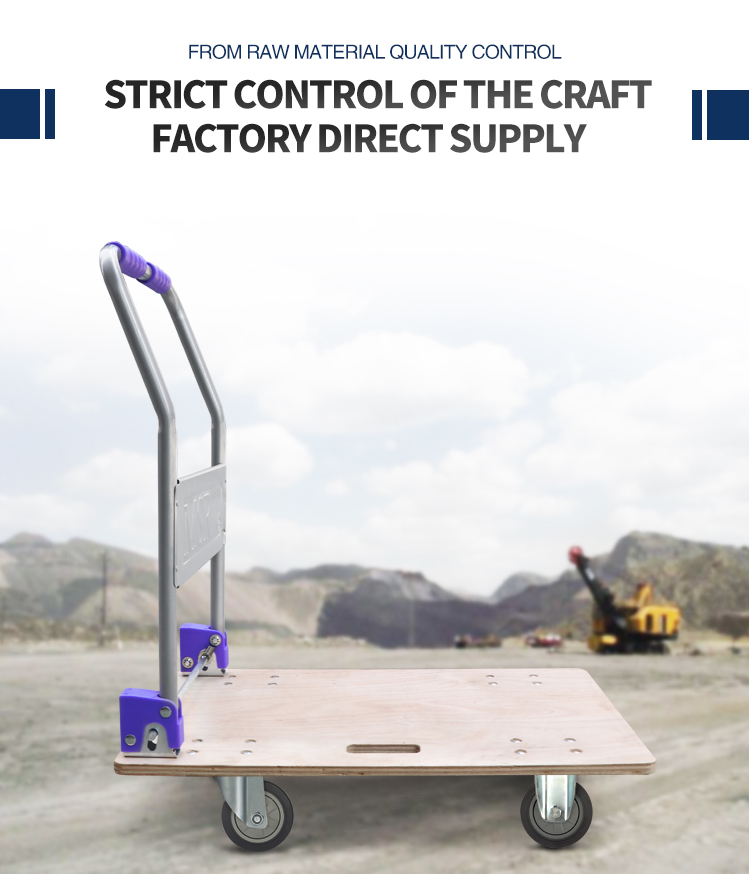
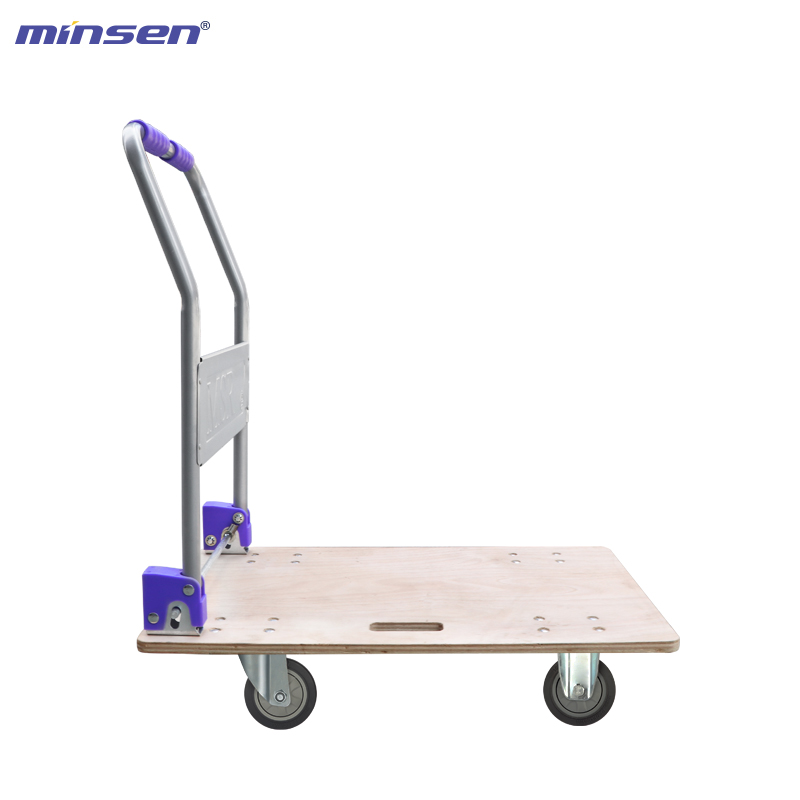
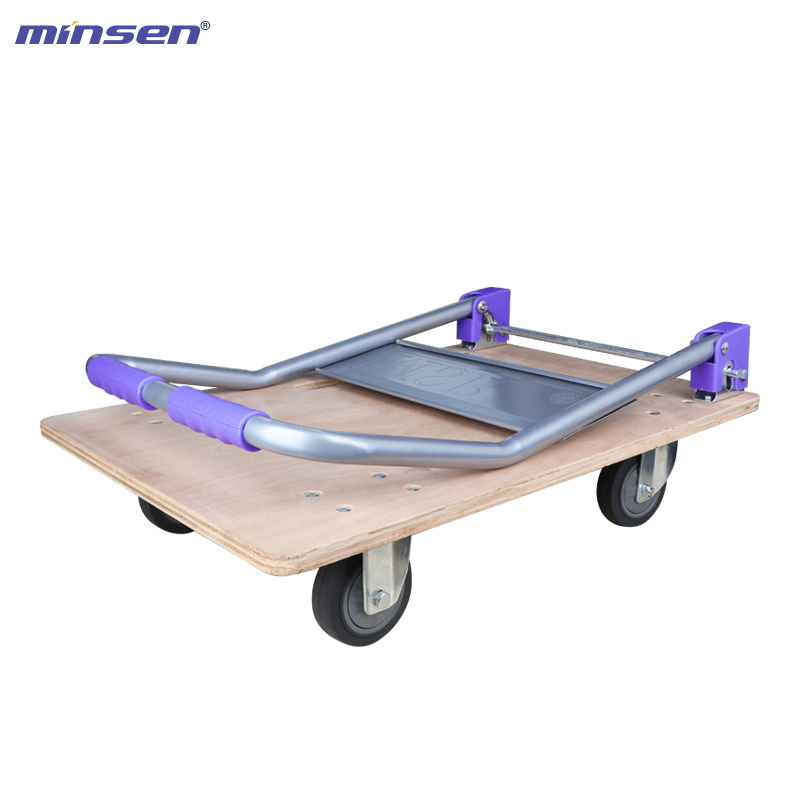
Fixed-frame hand trucks are durable, but they occupy floor space constantly. A folding hand truck trolley collapses flat when not in use, stacking neatly against a wall or inside a vehicle. This makes it the preferred choice for delivery drivers, event staff, retail operations, and any environment where storage real estate is scarce.
Beyond space savings, folding models are easier to transport between sites. A technician making multiple stops can carry the trolley in a van without dedicating permanent cargo space to it. The operational flexibility that comes from a collapsible frame often translates directly into reduced labor time and lower logistical overhead.
Structurally, modern folding trolleys are built to withstand significant loads. Heavy-gauge steel frames, reinforced hinge points, and locking mechanisms ensure the platform stays rigid under weight. The folding feature adds zero meaningful fragility when the design is executed properly—a distinction MINSEN's engineering team takes seriously across every trolley model produced at its 8,000-square-meter manufacturing facility in Kaiping, China.
How to Match a Trolley to Your Specific Application
The wrong trolley creates more problems than no trolley at all. Overloading a light-duty frame accelerates wear and creates safety risks. Using a soft-wheel model on rough concrete floors leads to premature bearing failure. Matching the equipment to the task requires evaluating three variables: load capacity, wheel type, and operating environment.
The table below provides a quick reference for common applications:
Application | Recommended Load Capacity | Wheel Type | Frame Material |
Retail stockroom | Up to 150 kg | Rubber or TPR | Steel tube |
Warehouse logistics | 150–300 kg | Polyurethane | Heavy-gauge steel |
Outdoor/rough terrain | 150–250 kg | Pneumatic | Reinforced steel |
Food processing | Up to 200 kg | Stainless / TPR | Stainless steel |
Event/exhibition | Up to 120 kg | Rubber | Lightweight aluminum |
Construction site | 200–350 kg | Pneumatic | Heavy-gauge steel |
Wheel selection deserves particular attention. Rubber wheels absorb vibration and protect finished floors but wear faster under heavy loads. Polyurethane wheels offer a longer service life and higher load ratings. Pneumatic wheels handle uneven outdoor surfaces but require maintenance. The operating surface should drive the wheel decision before any other factor.
What Separates a Quality Trolley from a Short-Lived One
Most trolley failures trace back to three weak points: the hinge mechanism, the axle mounts, and the surface platform. On low-quality units, hinges fatigue under repeated folding cycles and develop play that compromises load stability. Axle mounts crack when side loads are applied during turning. Platform surfaces delaminate or bend under concentrated weight.
MINSEN addresses these failure points through end-to-end production control. Hardware stamping, rubber processing, and injection molding all occur in-house, which means quality inspection happens at every stage rather than only at final assembly. The result is consistent dimensional tolerances and material properties across production runs—critical for buyers sourcing in volume.
Exploring the full range of hand trucks and trolleys available from MINSEN reveals how design varies significantly by application. Roll pallets, flat platform trolleys, assembly carts, and TC-series trolleys each serve distinct operational needs. Understanding the differences before purchasing prevents the common mistake of buying a general-purpose unit for a specialized task.
The Role of Caster Quality in Trolley Performance
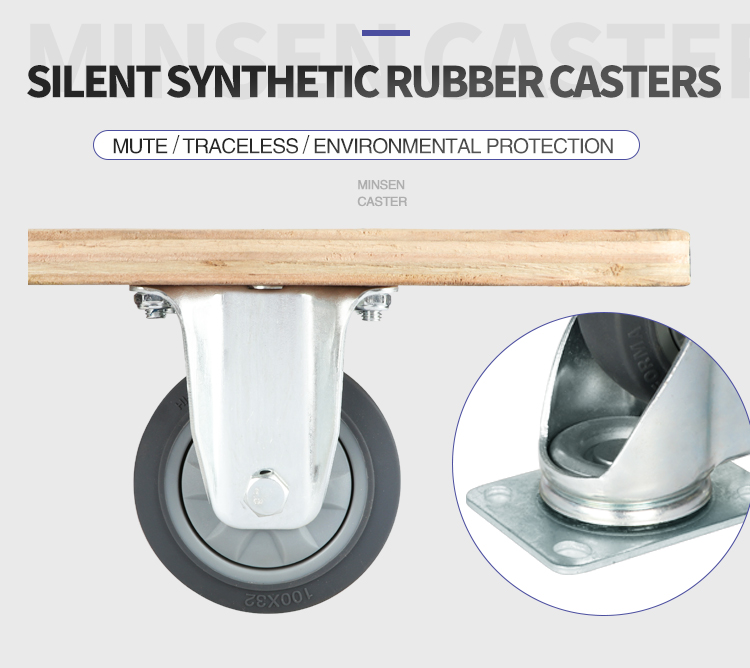
A trolley's mobility depends entirely on the wheels attached to it. This is where many buyers underestimate the impact of caster selection. The wheel compound, bearing type, bracket thickness, and swivel radius all determine how smoothly a loaded trolley moves and how long it lasts under daily use.
MINSEN manufactures casters across a broad spectrum—from light-duty universal casters to extra heavy-duty industrial models capable of handling extreme loads. Because casters and trolleys are produced under the same roof, MINSEN can optimize wheel-to-frame pairing in ways that third-party assembly cannot replicate. The bearing loads are matched to the frame's structural limits, and wheel compounds are selected based on the platform's intended surface conditions.
When sourcing a hand trolly for a specific environment, ask the supplier whether the casters were specified for that application or simply fitted as a standard option. The answer reveals a great deal about the product's design philosophy.
Getting the Most Out of Your Trolley Investment
Trolleys, like any industrial tool, perform best when operators use them within rated limits and maintain them consistently. A few practical guidelines extend service life significantly:
Inspect hinge locks before each load. A locked hinge that has developed play should be repaired before the trolley returns to service.
Clean wheel bearings in dusty or debris-heavy environments. Contaminated bearings accelerate wear and increase push resistance.
Distribute loads evenly across the platform. Concentrating weight on one side increases stress on axle mounts and can cause the frame to twist over time.
Store folded trolleys vertically. Stacking them horizontally under weight can permanently deform the frame.
For operations running multiple shifts, rotating trolleys rather than using the same unit continuously extends overall fleet life. It also makes wear patterns more predictable, which simplifies maintenance scheduling.
Making the Right Choice for Your Operation
A folding hand truck trolley is one of those tools that earns its cost quickly. The reduction in manual lifting incidents alone justifies the investment for most operations. When the design is right—robust frame, matched casters, reliable folding mechanism—the equipment disappears into the workflow. Workers stop thinking about it because it simply works.
MINSEN has spent over a decade refining trolley designs for warehouse, logistics, retail, and industrial clients globally. With OEM support, multi-specification customization, and direct factory pricing, MINSEN offers buyers the ability to source equipment that fits their exact requirements rather than settling for a catalog compromise.
Contact MINSEN's team at sales@mingtaicaster.com to discuss specifications, minimum order quantities, or custom design requirements.
Frequently Asked Questions
What is the typical load capacity of a folding hand truck trolley?
Most folding hand truck trolleys are rated between 100 kg and 350 kg depending on frame material and design. Light-duty aluminum models typically handle up to 150 kg, while heavy-gauge steel units support 250–350 kg. Always verify the manufacturer's rated capacity before use, and never exceed it.
How do I know which wheel type is right for my floor surface?
Smooth concrete and epoxy floors suit rubber or polyurethane wheels, which roll quietly and protect the surface. Rough concrete, gravel, or outdoor terrain requires pneumatic wheels for shock absorption. Stainless steel or TPR wheels are recommended for food processing and wet environments where hygiene and corrosion resistance matter.
Is a folding trolley as strong as a fixed-frame trolley?
Yes, when built correctly. The structural integrity of a folding trolley depends on hinge quality and frame gauge. MINSEN's folding trolleys use reinforced hinge points and heavy-gauge steel frames that maintain rigidity under full rated load. The folding mechanism adds no measurable weakness to a properly engineered unit.
Can MINSEN produce trolleys to custom specifications?
Yes. MINSEN offers OEM and ODM services, accepting custom orders for frame dimensions, wheel type, load capacity, surface material, and color. Lead times and minimum quantities vary by specification. Contact the MINSEN sales team directly to discuss requirements.
What is the difference between a hand truck and a platform trolley?
A hand truck (also called a sack truck) uses a vertical frame with a small toe plate at the base, designed for upright loads like boxes and appliances. A platform trolley has a flat horizontal deck suited for distributing weight across multiple items. Folding designs are available in both configurations, and the right choice depends on the shape and nature of the loads being moved.