TL;DR:
Worn caster wheels reduce load capacity, damage floors, and create safety risks. Choosing the right replacement caster wheels for your application—based on load rating, floor type, and environment—extends equipment life and prevents costly downtime. MINSEN Casters offers factory-direct options across industrial, medical, and commercial use cases.
Caster wheels are easy to overlook. They sit at the bottom of carts, racks, and workstations, quietly doing their job—until they don't. A flat spot, a cracked housing, or a seized bearing can bring an entire warehouse workflow to a halt. The cost of that downtime almost always exceeds the cost of the wheels themselves.
This guide covers everything you need to know about replacing caster wheels: when to do it, what to look for, and how to choose the right product for your specific application. Whether you manage a manufacturing facility, a medical environment, or a commercial space, the right caster makes a measurable difference.
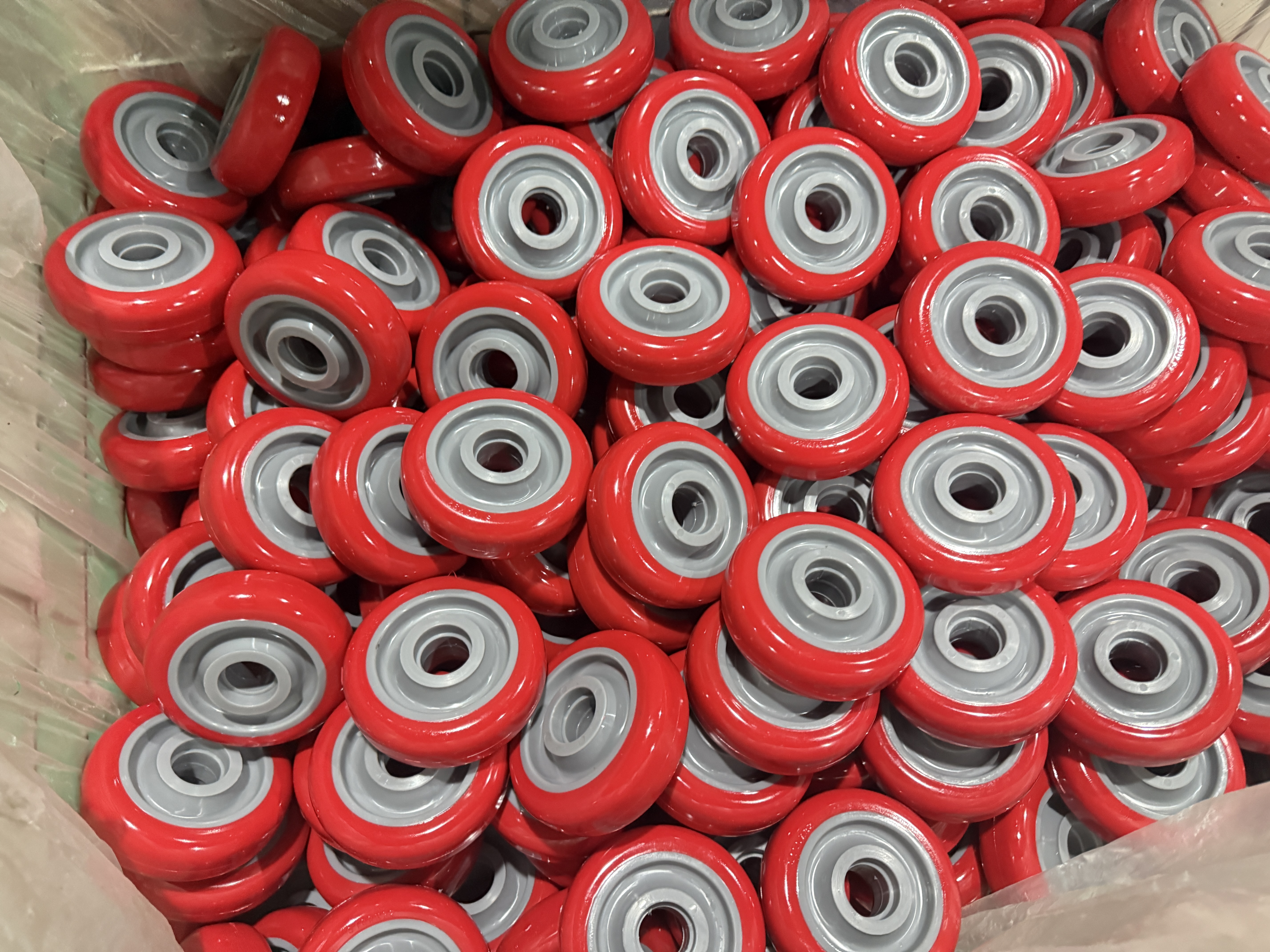
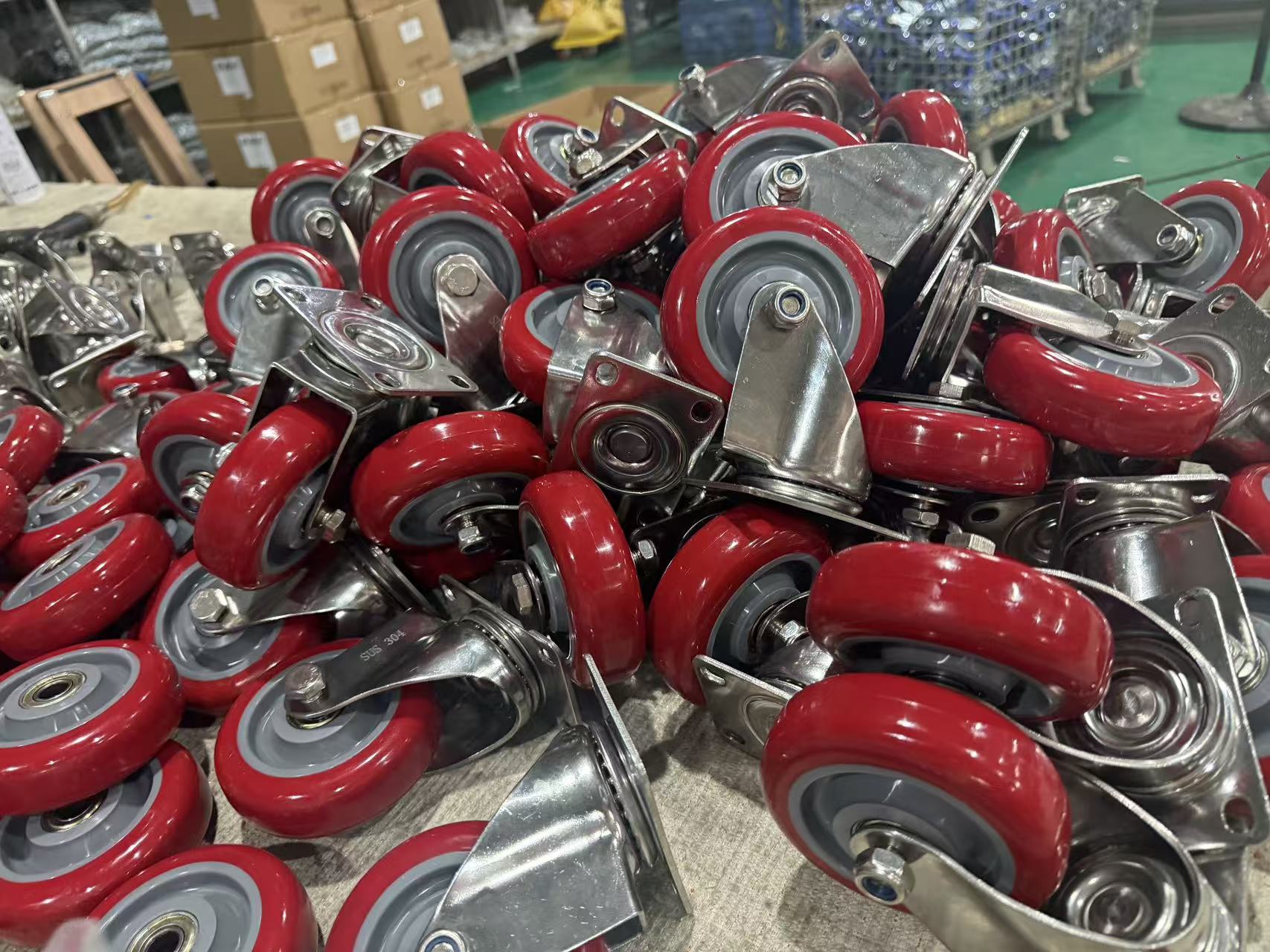
When Should You Replace Your Caster Wheels?
Not every worn caster needs immediate replacement, but knowing the warning signs prevents bigger problems down the line.
Signs it's time to replace:
Visible flat spots or cracks on the wheel tread
Excessive wobbling or vibration during movement
Squealing or grinding sounds when rolling
Difficulty steering or swiveling
Uneven wear across a set of four wheels
Wheel no longer holds its rated load capacity
As a general rule, casters in high-use industrial environments should be inspected every three to six months. In lighter commercial settings, annual checks are typically sufficient. Replacing wheels proactively—rather than after failure—reduces the risk of equipment damage and workplace injuries.
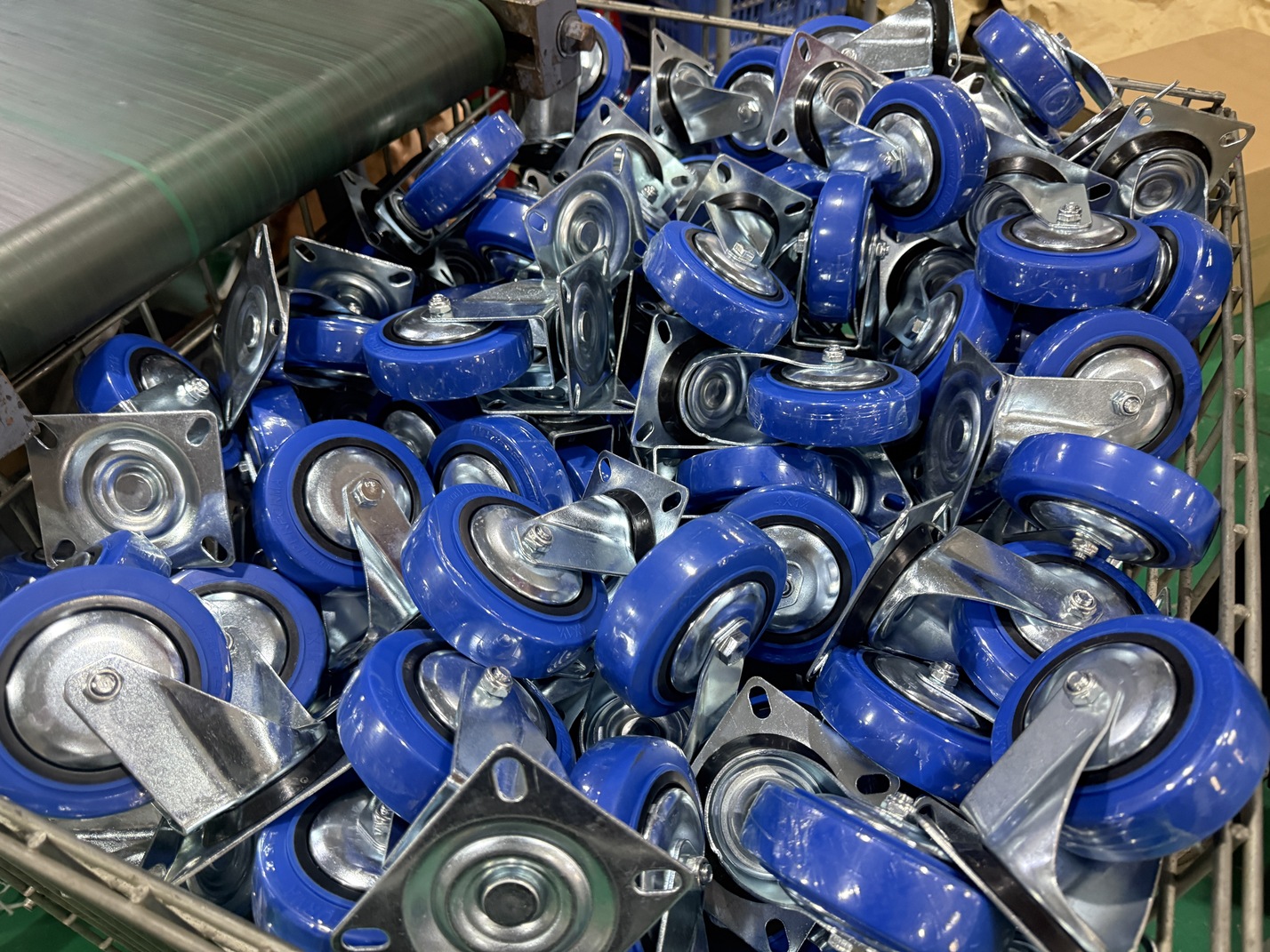
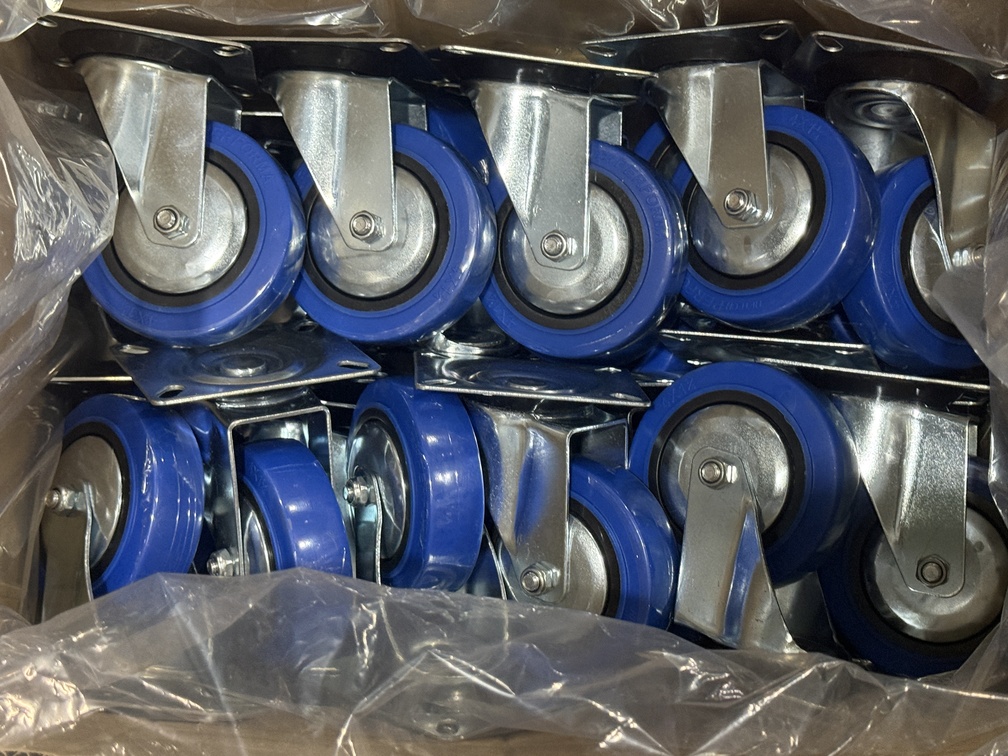
What Are the Main Types of Caster Wheels?
Caster wheels are not one-size-fits-all. The material, size, and load rating all affect performance in different environments. The table below summarizes the most common types and their best-fit applications:
Wheel Material | Load Capacity | Best For | Floor Compatibility |
Polyurethane (PU) | Medium–Heavy | Warehouses, manufacturing | Hard floors, smooth concrete |
Thermoplastic Rubber (TPR) | Light–Medium | Retail, hospitality | Hard floors, light tiles |
Rubber | Light–Medium | Quiet environments, hospitals | Most indoor floors |
Nylon | Heavy | Industrial, high-load carts | Hard, flat surfaces |
Cast Iron | Extra Heavy | Foundries, high-temp areas | Industrial floors |
Stainless Steel | Heavy | Food processing, medical | Wet or corrosive environments |
Foam-filled | Medium | Outdoor, uneven terrain | Gravel, pavement, rough surfaces |
Choosing the wrong material—say, a hard nylon wheel on a polished concrete floor in a hospital—leads to noise, floor damage, and poor maneuverability. Matching the wheel to the environment is just as important as matching it to the load.
How Do You Calculate the Right Load Capacity for Heavy Duty Casters?
Getting load capacity right is the most critical step in any caster selection. Undersized wheels fail prematurely; oversized ones add unnecessary cost.
The standard formula used by industrial buyers: divide the maximum gross weight of the loaded cart by the number of wheels, minus one. This accounts for uneven weight distribution on imperfect floors.
For example, a cart weighing 1,200 kg on four wheels would require each caster to handle at least 400 kg (1,200 ÷ 3). That safety buffer protects against sudden load shifts and surface irregularities.
For facilities handling heavy machinery, pallets, or industrial equipment, it pays to buy heavy duty caster wheels that exceed your calculated minimum by at least 20–30%. MINSEN's heavy-duty and extra-heavy-duty series are rated for demanding environments, with dual-axle designs and high-temperature resistant options for specialized applications.
What Environmental Factors Should You Consider Before Replacing Casters?
Load capacity is just one variable. Environmental conditions often determine which materials and configurations actually hold up.
Temperature: Standard rubber and PU wheels begin to degrade above 80°C. Applications involving ovens, kilns, or heat treatment require wheels rated for 230°C–310°C. MINSEN's high-temperature resistant caster series is specifically engineered for these environments.
Moisture and chemicals: Stainless steel casters are the standard choice for food processing plants, pharmaceutical facilities, and anywhere subject to regular washdowns. Standard steel brackets corrode quickly in wet conditions.
Static electricity: Electronics manufacturing and cleanroom environments require antistatic or conductive casters to prevent electrostatic discharge. MINSEN offers dedicated antistatic and conductive caster series for these applications.
Floor surface: Soft rubber and TPR wheels protect delicate floors; harder wheels like nylon or cast iron are better suited to rough industrial surfaces where soft materials would wear down quickly.
Why MINSEN Casters Is a Reliable Source for Caster Replacements
Kaiping Mingtai Caster Manufacturing Co., Ltd.—operating under the MINSEN brand—has been manufacturing casters and trolleys since 2010. The facility covers 8,000 square meters and includes in-house hardware stamping, rubber processing, and injection molding production lines. Full-process quality control, from raw material sourcing through to finished product testing, means every wheel meets consistent performance standards before it leaves the factory.
MINSEN supplies casters directly, with no middleman markup. That means buyers get factory-grade quality at competitive pricing, whether they're ordering standard stock items or custom-spec products. OEM support, multi-spec customization, and small MOQ options are available for businesses that need tailored solutions.
The product range covers everything from mini casters and medium-duty series wheels to scaffold casters, medical casters, and pneumatic wheels—making MINSEN a practical single-source supplier for facilities managing multiple equipment types.
For buyers comparing options across specifications, MINSEN's full catalog of caster wheels for sale covers light, medium, heavy, and extra-heavy duty applications, with specialty options for high-temperature, antistatic, and stainless steel requirements.
Frequently Asked Questions About Replacing Caster Wheels
How do I know which caster size to order as a replacement?
Measure the wheel diameter, wheel width, and the overall mounting height of the existing caster. Also check the mounting type—plate mount, stem mount, or bolt hole—and confirm the bore diameter if the wheel runs on an axle. MINSEN's customer service team can assist with matching specifications if you provide the original part dimensions.
Can I replace just the wheel without replacing the entire caster assembly?
Yes, in many cases. If the bracket and swivel mechanism are in good condition, replacing only the wheel is more cost-effective. MINSEN offers single wheels separately for this purpose. However, if the bracket shows corrosion, cracking, or bearing wear, replacing the full assembly is the safer option.
What is the difference between swivel and rigid casters, and does it affect replacement?
Swivel casters rotate 360 degrees and are used for maneuverability. Rigid casters move in a fixed direction and provide stability. When replacing, match the type exactly unless you're intentionally reconfiguring your cart's movement pattern. Mixing types incorrectly can make equipment harder to control.
How long do industrial caster wheels typically last?
Lifespan depends heavily on load, surface, and usage frequency. In light commercial use, quality casters can last three to five years. In high-cycle industrial environments, annual replacement is common for standard-grade wheels. Investing in higher-rated wheels upfront typically reduces total replacement costs over time.
Does MINSEN offer custom casters for non-standard applications?
Yes. MINSEN accepts custom orders and OEM projects. The customization process covers wheel size, material, color, bracket type, and load rating. Lead times and minimums vary by specification—contact the MINSEN sales team at sales@mingtaicaster.com or via WhatsApp for a project quote.
Make the Right Replacement Call
Caster wheels are a small component with an outsized impact on equipment performance, floor condition, and operator safety. Getting the replacement right—matching material, load rating, and environment—pays off in longer service life and fewer disruptions.
MINSEN Casters combines factory-direct pricing with a broad product range and customization support, making it a practical choice for procurement teams, facility managers, and equipment buyers at any scale. Explore the full MINSEN catalog or contact the team directly to find the right fit for your next replacement project.