TL;DR:
A hand trolley is a manual material-handling tool that reduces physical strain, lowers injury risk, and speeds up load transport in warehouses, logistics centers, and commercial facilities. Selecting the right model—based on load capacity, folding mechanism, and wheel type—determines whether your team gains a genuine productivity advantage or struggles with an ill-fitted tool.
Moving heavy loads by hand is one of the leading causes of musculoskeletal injuries in warehouses and commercial environments. According to the U.S. Bureau of Labor Statistics, overexertion injuries account for roughly 35% of all workplace injury cases annually. The fix is often simpler than facilities managers expect: the right material-handling equipment, chosen deliberately, eliminates most of the risk before it becomes a claim.
This guide covers what separates a high-performance hand trolley from an underperforming one, how to match the tool to your specific environment, and why the quality of the caster wheels underneath matters just as much as the frame above them. At MINSEN, we manufacture both the trolleys and the caster components that go into them—giving us a perspective on mobility solutions that most suppliers simply don't have.
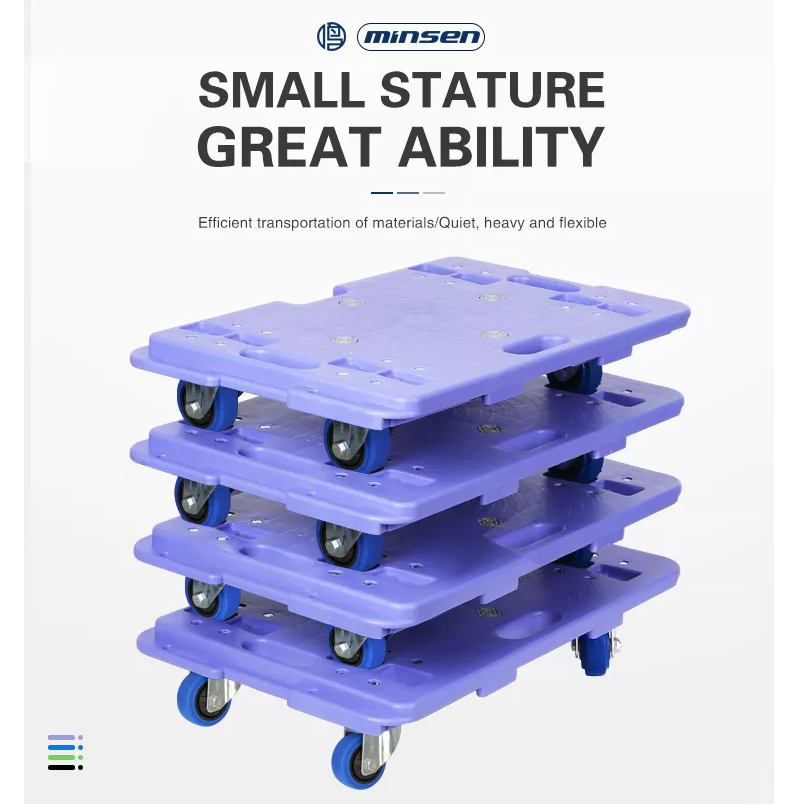
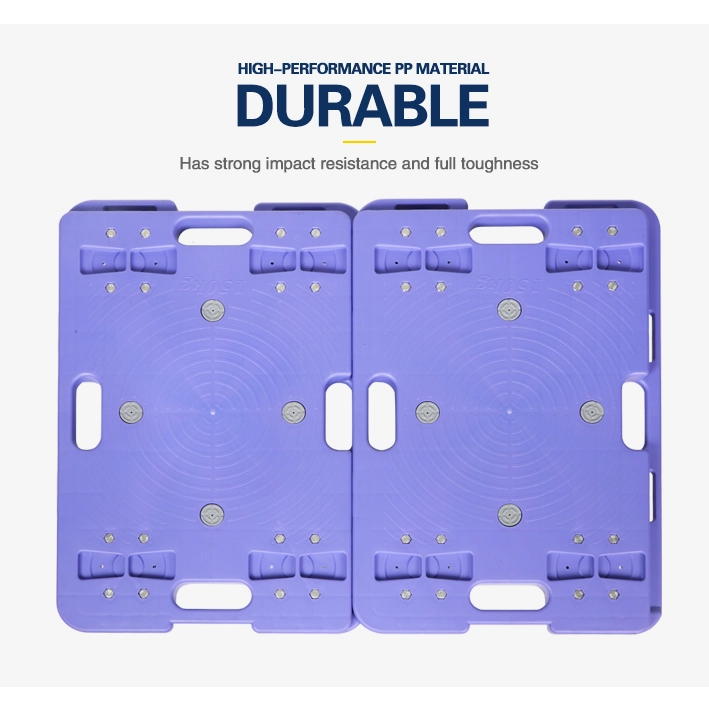
What types of hand trolleys exist, and which environments suit each one?
Not all trolleys are built for the same job. The wrong choice wastes money and creates new problems. The right choice becomes invisible—workers just get things done faster.
Trolley Type | Best Environment | Typical Load Capacity | Key Feature |
Standard upright (L-shaped) | Warehouses, retail stockrooms | 150–300 kg | Simple, durable frame |
Folding / collapsible | Delivery, multi-site use | 80–200 kg | Compact for storage and transport |
Platform trolley | Manufacturing, logistics | 200–500 kg | Flat surface for large, awkward loads |
Stair-climbing trolley | Multi-floor buildings | 100–250 kg | Tri-wheel mechanism for step navigation |
Heavy-duty industrial trolley | Factories, steel facilities | 500 kg+ | Reinforced frame and heavy-duty casters |
The environment dictates the specification. Smooth concrete floors allow for smaller, harder wheels and tighter turning radii. Rough or uneven surfaces demand pneumatic or shock-absorbing casters to protect both the load and the floor. Temperature extremes—found in food processing plants or foundries—require wheels rated for those conditions.
Why does a folding design matter for modern operations?
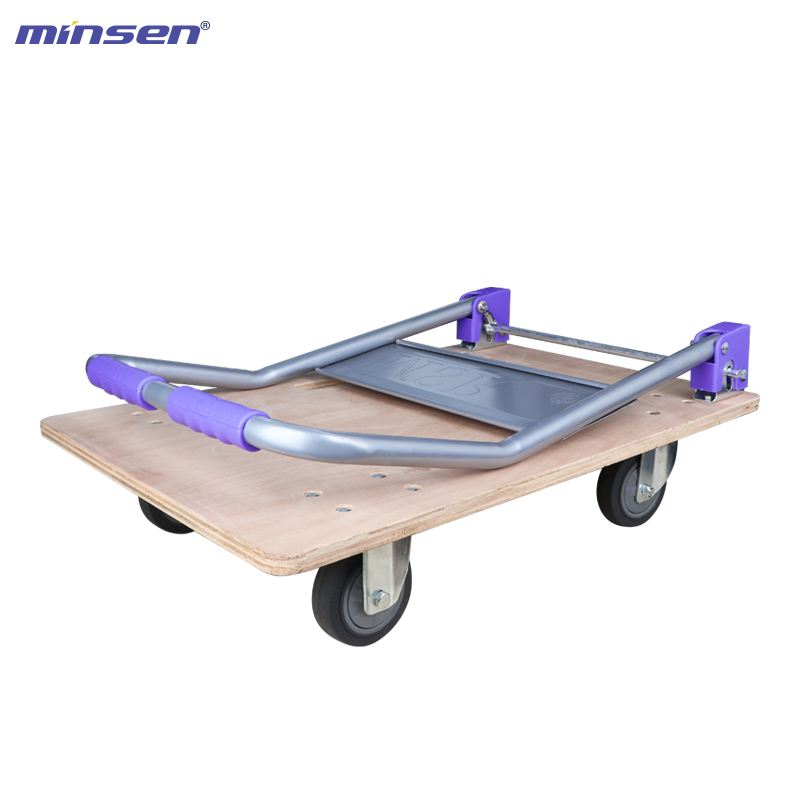
Space costs money. A folding hand truck trolley addresses one of the most overlooked inefficiencies in commercial operations: storage footprint. When a trolley folds flat, a single storage rack can hold four to six units in the same space a standard trolley occupies alone.
Beyond storage, folding models suit delivery operations, service technicians, and any team that moves between locations. They load into vans without taking up cargo space, collapse quickly without tools, and deploy just as fast when needed. MINSEN's folding flat trolley is built with a steel frame and fitted with high-quality caster wheels from the same production line as our industrial caster series—so the mobility performance matches the structural quality.
The common tradeoff is load capacity. Folding frames sacrifice some rigidity compared to fixed-frame designs. For loads under 200 kg, this is rarely a problem. For heavier applications, a fixed-frame or platform model is the more appropriate choice.
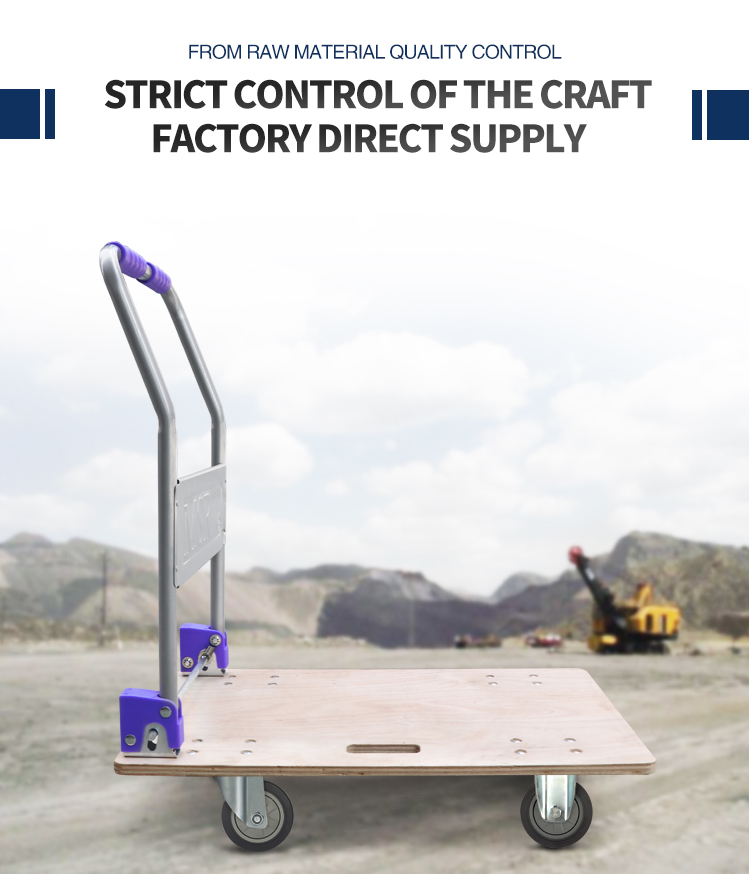
How do caster wheels affect hand trolley performance?
Most buyers focus on the frame and overlook the wheels. This is a mistake. The caster assembly determines rolling resistance, floor protection, noise level, and how safely the trolley handles under load.
A trolley rated for 300 kg with low-grade casters will be harder to push, more likely to veer off course, and more damaging to floor surfaces than a trolley with half that rating fitted with precision-engineered wheels. At MINSEN, we manufacture a full range of caster wheels—from TPR and PU compounds to high-temperature and anti-static variants—specifically because we know how much the wheel specification changes the outcome.
Key caster factors to evaluate for any trolley application:
Wheel diameter: Larger wheels roll more easily over surface irregularities and reduce operator effort
Material: TPR wheels protect floors and reduce noise; nylon wheels handle heavier loads on smooth surfaces
Bearing type: Precision ball bearings reduce rolling resistance significantly compared to plain bore options
Swivel vs. fixed: Front swivel casters allow steering; rear fixed casters maintain direction under load
When sourcing hand trucks and trolleys from MINSEN, buyers benefit from a manufacturer that controls both the trolley frame and the caster specification—reducing the risk of mismatched components that compromise safety and performance.
What load capacity should you specify for your application?
Under-specifying is dangerous. Over-specifying wastes money. The calculation is straightforward.
Take the maximum weight your team will ever move in a single trip—not the average, the maximum. Add 20–25% as a safety buffer. That figure is your minimum load rating. Select a trolley and caster combination that meets or exceeds it.
MINSEN's manufacturing process applies the same principle to every unit: each caster passes wear resistance, load-bearing, and rotation tests before leaving the production floor. The 8,000 m² facility in Kaiping, Guangdong, runs full-process production control from raw material sourcing through finished product testing, which means load ratings on MINSEN products reflect real performance under real conditions—not optimistic marketing figures.
What should buyers look for when evaluating trolley suppliers?
Quality signals to look for in a trolley supplier:
Vertically integrated production: Suppliers who manufacture their own caster components have tighter quality control over the complete product
Material transparency: Reputable manufacturers specify frame steel grade, wheel compound, and bearing type—not just the load rating
Customization capability: Operations with unique requirements (temperature extremes, cleanroom environments, anti-static needs) should confirm the supplier can configure accordingly
After-sales support: A responsive team matters when a wheel needs replacing or a frame specification changes
MINSEN has supplied mobility solutions to logistics, medical, manufacturing, hotel, and food-processing sectors since 2010. OEM and custom orders are supported, with sample production available before full-order commitment.
Frequently Asked Questions
What is the difference between a hand trolley and a hand truck?
A hand truck typically refers to an L-shaped, two-wheeled upright tool used to tilt and roll loads. A hand trolley is a broader category that includes platform trolleys, folding designs, and four-wheeled models. In practice, the terms are often used interchangeably, though hand trolley more commonly refers to flat-bed or multi-wheel configurations.
How much weight can a standard hand trolley carry?
Standard hand trolleys typically carry between 150 kg and 300 kg. Heavy-duty industrial models can exceed 500 kg. The safe working load depends on both the frame rating and the caster wheel capacity—both must be rated for the intended load.
Is a folding hand truck trolley as durable as a fixed-frame model?
A well-engineered folding trolley made from quality steel with reinforced joints is highly durable for loads within its rated capacity. The key variable is the hinge and locking mechanism quality. MINSEN's folding flat trolley uses a robust locking system and the same caster quality standards applied across the full product range.
What wheel material is best for warehouse floors?
TPR (Thermoplastic Rubber) and PU (Polyurethane) wheels perform best on warehouse floors. They protect surface coatings, reduce noise, and roll smoothly. Nylon wheels are suitable for heavier loads on smooth concrete but are harder on floor finishes.
Can MINSEN produce custom trolley configurations?
Yes. MINSEN supports OEM and custom orders, including adjustments to frame dimensions, load capacity, wheel specification, and surface finish. Contact the sales team at sales@mingtaicaster.com to discuss requirements.