Moving heavy loads by hand is one of the fastest ways to injure a back or damage a floor. Yet many businesses still choose their trolleys based on price alone, without considering weight capacity, wheel material, or how the equipment will hold up over years of daily use. Get the choice wrong, and you're looking at frequent breakdowns, safety incidents, and replacement costs that add up fast.
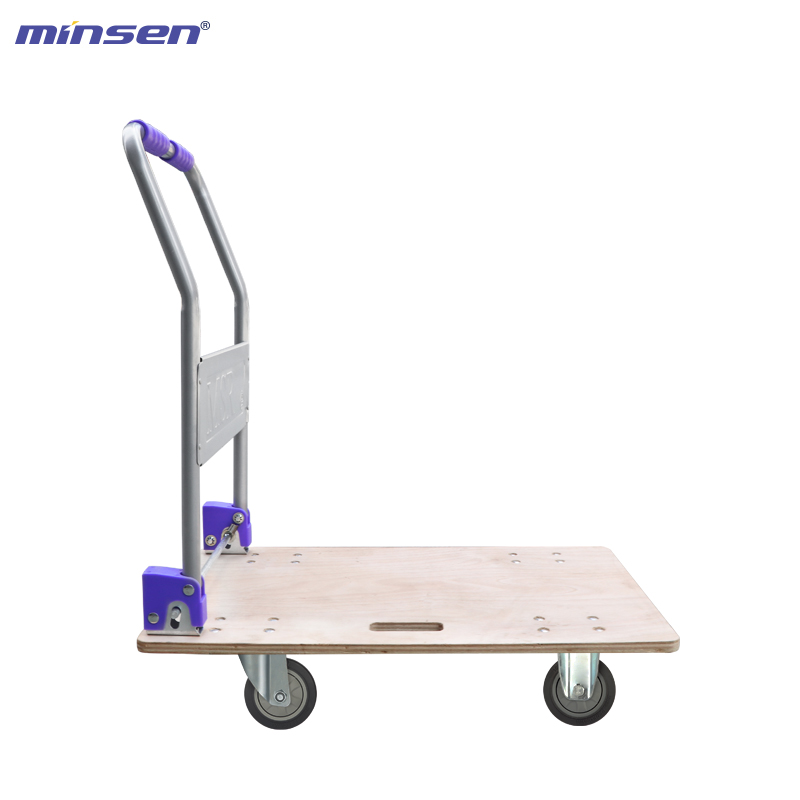
A well-built heavy duty hand trolley solves this problem by distributing weight evenly, rolling smoothly across different floor surfaces, and holding up under repeated stress. But "heavy duty" isn't a one-size-fits-all label. The right trolley for a warehouse floor might be completely wrong for a factory production line, and vice versa. This guide walks through the factors that actually matter when selecting a hand trolley for heavy loads, so you can avoid costly mistakes and choose equipment built to last.
Why Load Capacity Should Be Your Starting Point
Every hand trolley has a rated weight capacity, and this number should guide every other decision you make. It's tempting to buy based on size or price, but a trolley that's overloaded even occasionally will wear out its wheels, bend its frame, and eventually fail—often at the worst possible moment.
As a general rule, choose a trolley rated for at least 20% more than your heaviest expected load. This buffer accounts for uneven weight distribution, rough floor transitions, and the natural wear that happens over time. Manufacturers like MINSEN, which has spent over a decade producing casters and trolleys from its 8,000-square-meter factory in Kaiping, China, design their equipment with these real-world stress factors in mind rather than just lab conditions.
What Wheel Material Means for Performance
The wheels on a trolley do more work than most people realize. They determine how much effort it takes to push a load, how much noise the trolley makes, and how much damage it does to your floors over time.
Rubber wheels absorb shock well and protect sensitive flooring, but they wear down faster under extremely heavy loads.
Polyurethane (PU) wheels balance durability and floor protection, making them a popular middle-ground choice.
Nylon or steel wheels handle the highest loads and resist wear exceptionally well, but they can be harsh on floors and noisier during use.
If your team operates on concrete in a manufacturing setting, a rugged nylon wheel might make sense. If you're moving equipment through a hospital or retail space, PU or rubber will protect both the floor and the load.
Matching Trolley Type to Your Work Environment
Not every heavy load moves through the same kind of space. A trolley that performs well in a wide-open warehouse aisle might be impractical in a cramped storeroom or on a loading dock with uneven pavement.
Trolley Type | Typical Load Capacity | Best Environment | Key Advantage |
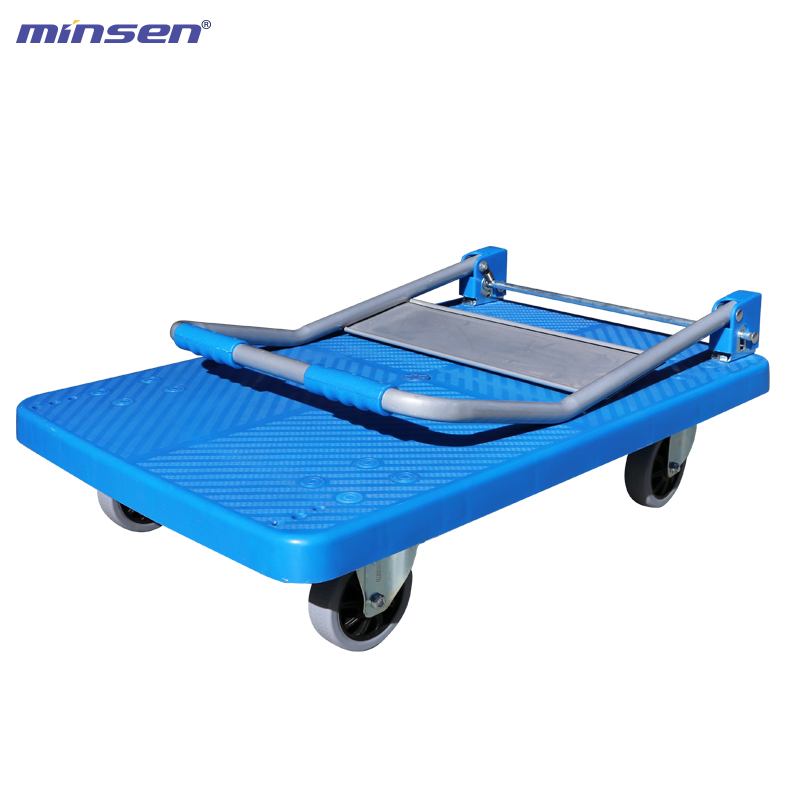
Folding platform trolley | 150–300 kg | Retail, offices, tight storage | Collapsible for easy storage |
Two-wheel hand truck | 200–350 kg | Loading docks, deliveries | Simple, quick maneuvering |
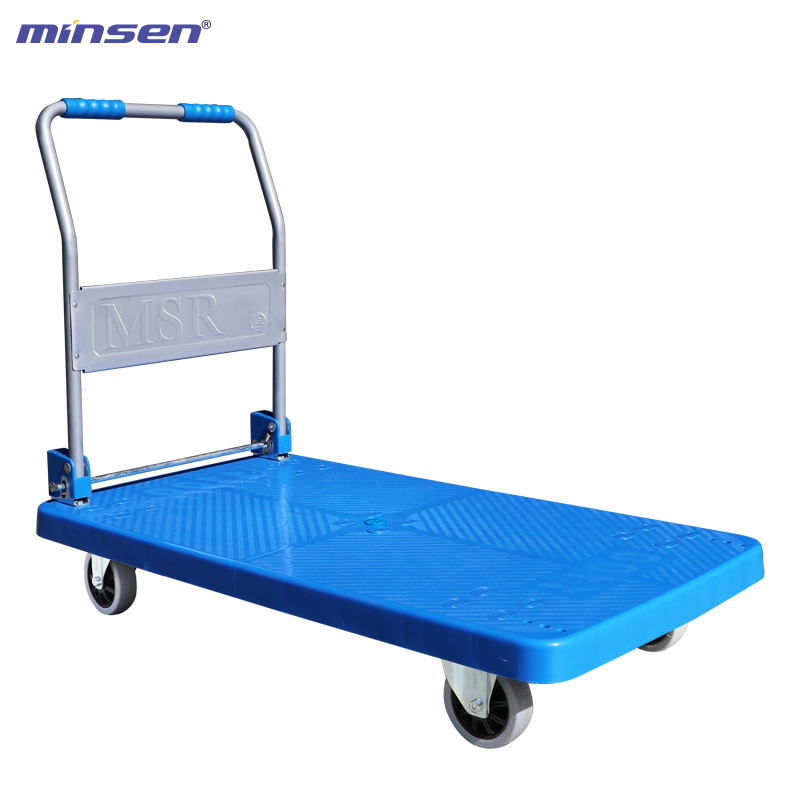
Four-wheel flatbed cart | 300–600 kg | Warehouses, factories | Stable for bulky or tall loads |
Heavy-duty platform trolley | 500–1000+ kg | Manufacturing, logistics | Reinforced frame for maximum weight |
This kind of comparison makes it easier to narrow down options before diving into brand-specific specifications. Once you know the category that fits your environment, you can evaluate individual models against your daily workflow.
Why Frame Construction and Build Quality Matter
Even the strongest wheels won't help if the frame beneath them flexes or cracks under pressure. Look for trolleys built with reinforced steel frames, welded joints rather than bolted ones, and a low center of gravity to prevent tipping during transport.
An industrial hand trolley designed for factory floors typically features thicker gauge steel and additional cross-bracing compared to lighter consumer models. This construction difference is often invisible until the equipment is under real load, which is why checking manufacturer specifications and quality certifications matters more than relying on appearance alone.
Companies that manufacture their own components, rather than assembling parts from multiple third-party suppliers, tend to offer more consistent quality control. MINSEN, for example, handles hardware stamping, rubber processing, and injection molding all within its own facility, allowing for tighter tolerances and more reliable performance across production runs.
Considering Storage Space and Daily Handling
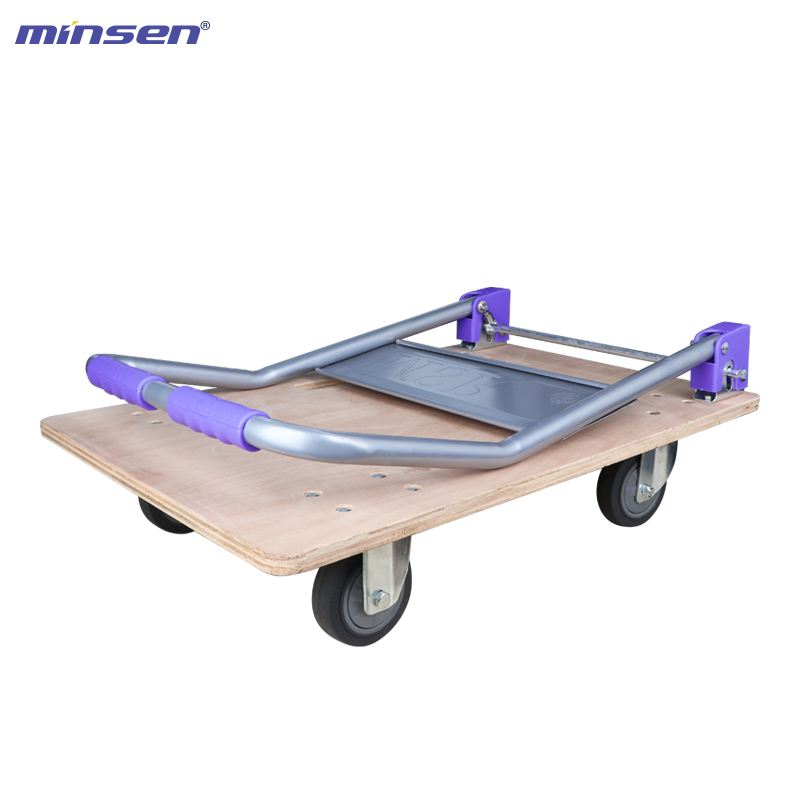
Load capacity and build quality matter most, but day-to-day practicality shouldn't be overlooked. If your team is moving trolleys in and out of storage constantly, a folding design saves space and reduces clutter. If the trolley stays in one place, like a fixed station on a production line, a non-folding heavy-duty model may offer better long-term stability.
A warehouse hand trolley used across multiple shifts and operators should also be easy to maneuver without specialized training. Features like ergonomic handles, secure locking brakes, and low-friction swivel wheels reduce operator fatigue and speed up daily tasks, which adds up to real productivity gains over months of use.
Making a Confident Final Decision
Choosing the right trolley isn't about finding the toughest-looking option on a catalog page. It's about matching load capacity, wheel material, frame construction, and daily handling needs to your actual working conditions. Take the time to measure your typical loads, walk through your facility's floor surfaces, and think about how often the equipment will be moved versus stationed.
Suppliers with manufacturing experience across multiple caster and trolley categories, like MINSEN, can often help identify the right combination of features for your specific application, including custom configurations when standard models don't quite fit. Getting this decision right the first time saves money, reduces downtime, and keeps your team working safely for years to come.