TL;DR:
Choosing the right trolley industrial equipment directly affects how safely and efficiently a facility moves goods. Key selection factors include load capacity, wheel material, frame construction, and operating environment. MINSEN, a China-based manufacturer established in 2010, produces a full range of trolleys and casters designed for warehouses, logistics centers, factories, and commercial operations.
Every facility manager eventually faces the same question: why does moving goods from point A to point B keep causing delays, injuries, or damage? The answer is almost always the same. The wrong equipment was chosen—or no real choice was made at all.
Material handling is one of those operational areas that gets overlooked until something breaks. A trolley industrial solution, selected correctly, does more than move boxes. It protects workers from repetitive strain injuries, reduces product damage, speeds up throughput, and lowers the total cost of labor over time. Get it wrong, and you're paying for it daily—in slower workflows, higher injury rates, and faster equipment replacement cycles.
This guide breaks down what procurement managers, facility operators, and logistics supervisors need to know before sourcing trolleys for industrial and commercial environments.
What factors determine the right trolley for an industrial facility?
The selection process starts with four core variables: load capacity, wheel specification, frame material, and use environment. Each one narrows your options considerably.
Load capacity is the most critical starting point. A common sourcing error is selecting equipment rated exactly at the expected load—leaving no margin for real-world variance. As a general rule, choose equipment rated at least 20–30% above your maximum expected payload. A trolley rated at 600 kg, such as MINSEN's foldable heavy-duty plastic platform trolley, gives facilities that operational buffer without adding unnecessary bulk to the unit itself.
Wheel material determines how the trolley interacts with your floor surface and environment. The wrong wheel destroys floors, generates excessive noise, and wears out prematurely. The right wheel glides quietly, protects the surface, and lasts for years. Here's a quick comparison:
Wheel Material | Best Surface | Noise Level | Load Capacity | Chemical Resistance |
Natural rubber | Smooth concrete, tile | Low | Medium | Low |
Polyurethane (PU) | Smooth to slightly rough | Very low | Medium–High | Medium |
Nylon | Rough concrete, outdoor | Medium | High | High |
Stainless steel | Wet/corrosive environments | High | Very high | Very high |
TPR (thermoplastic rubber) | General indoor | Low | Medium | Medium |
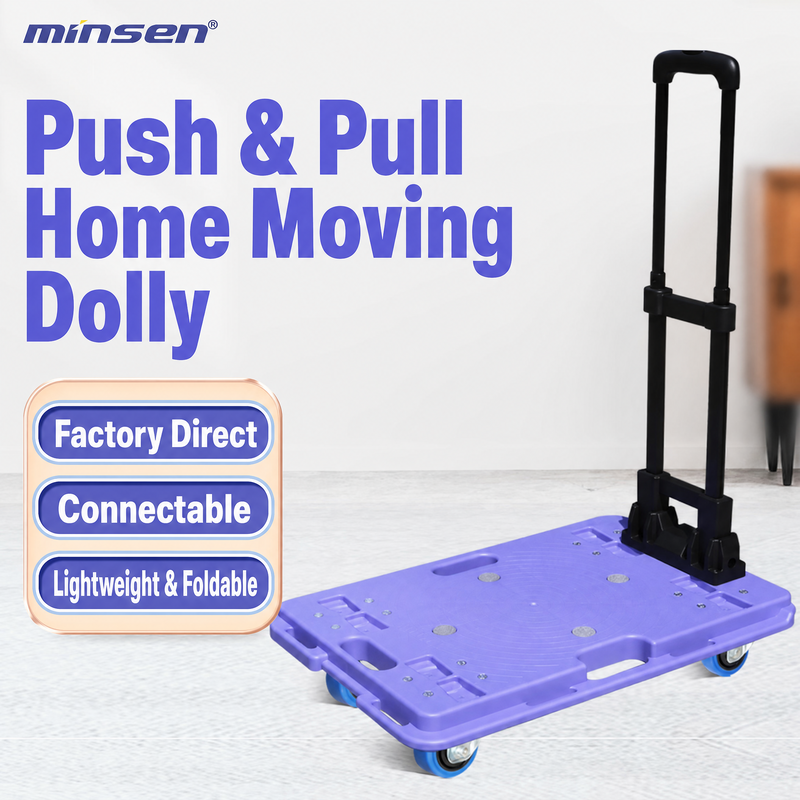
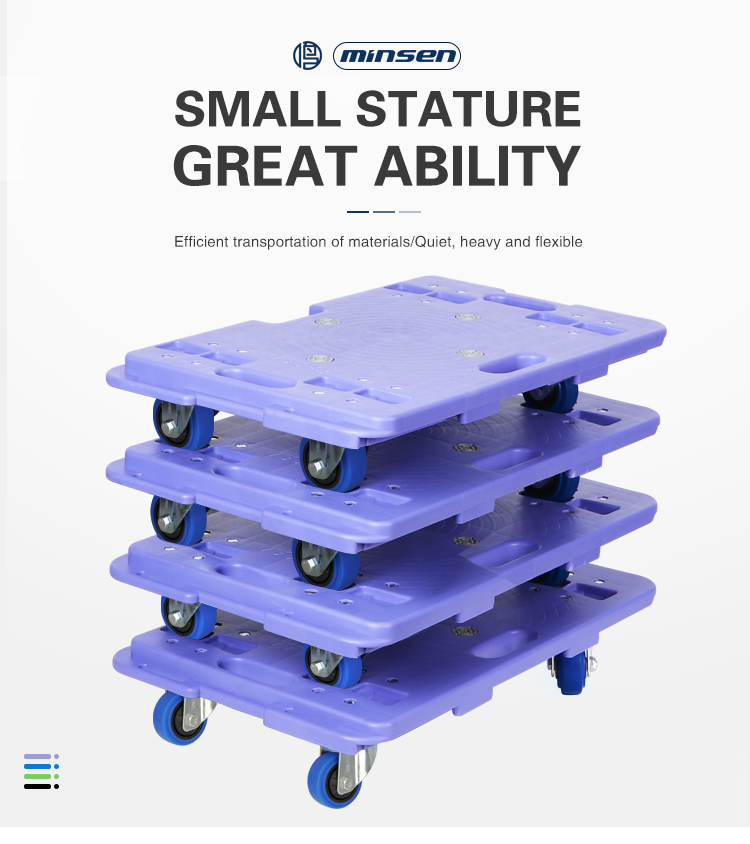
Frame material drives durability and weight. Steel frames handle the heaviest loads but add to the unit's own weight. High-performance polypropylene frames, like those used in MINSEN's stackable platform cart (Model MT1093, 150 kg capacity), offer a strong alternative when payload requirements are moderate and operator fatigue is a concern.
Use environment covers temperature range, exposure to chemicals or moisture, and floor conditions. Facilities operating in food processing, pharmaceuticals, or outdoor logistics each have different requirements—and what works in a dry warehouse will fail quickly in a wet dock.
How does frame construction affect trolley longevity in high-use facilities?
Frame construction is where manufacturers with genuine production expertise stand apart from suppliers simply reselling imported goods. MINSEN—operating from an 8,000 m² factory in Kaiping, Guangdong, China, with over a decade of manufacturing experience—applies hardware stamping, large-scale injection molding, and rubber processing under one roof. That means every structural component, from the base plate to the reinforcement ribs, is produced and inspected within the same facility.
The practical difference shows up in details that are easy to overlook during initial procurement: reinforced bottom structures that distribute load more evenly, anti-slip screw caps that prevent goods from shifting, and dust plugs that protect connecting rods from debris buildup. These are not cosmetic features. They extend service life and reduce maintenance frequency in high-cycle environments.
For facilities sourcing a commercial trolley at scale, direct manufacturer relationships eliminate the quality unpredictability that comes with middlemen. MINSEN supplies products directly from factory to buyer, with OEM and ODM options available for customers who need custom dimensions, surface treatments, or branding.
Which trolley configurations work best across different industrial environments?
Different operational contexts demand different equipment configurations. There is no single universal solution—but there are clear patterns based on environment type.
Warehousing and logistics: High-volume movement of mixed cargo. Priorities are payload capacity, stackability for space efficiency, and silent operation to reduce noise fatigue. MINSEN's stackable platform carts with 360° rotating natural rubber wheels address all three. The follow-me design—where the cart tracks the weight placed on it without additional mechanical linkage—reduces operator effort during long shifts.
Manufacturing and assembly lines: Consistent movement of parts between workstations. Ergonomics and maneuverability take priority. Low-profile platforms keep load centers close to the ground, reducing tip risk. Modular splicing capability allows operators to connect multiple units for larger payloads.
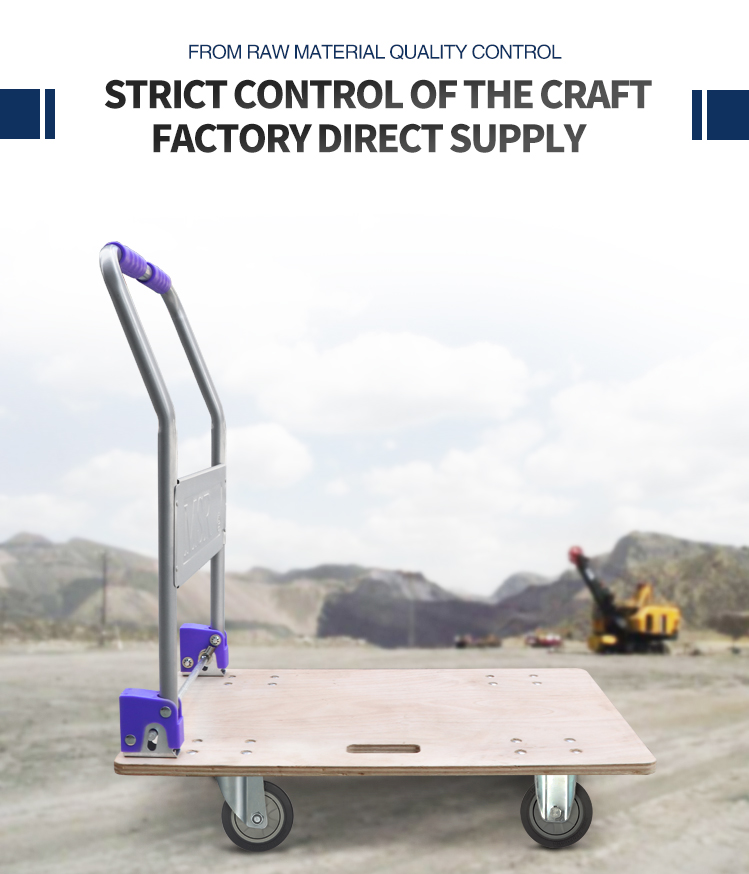
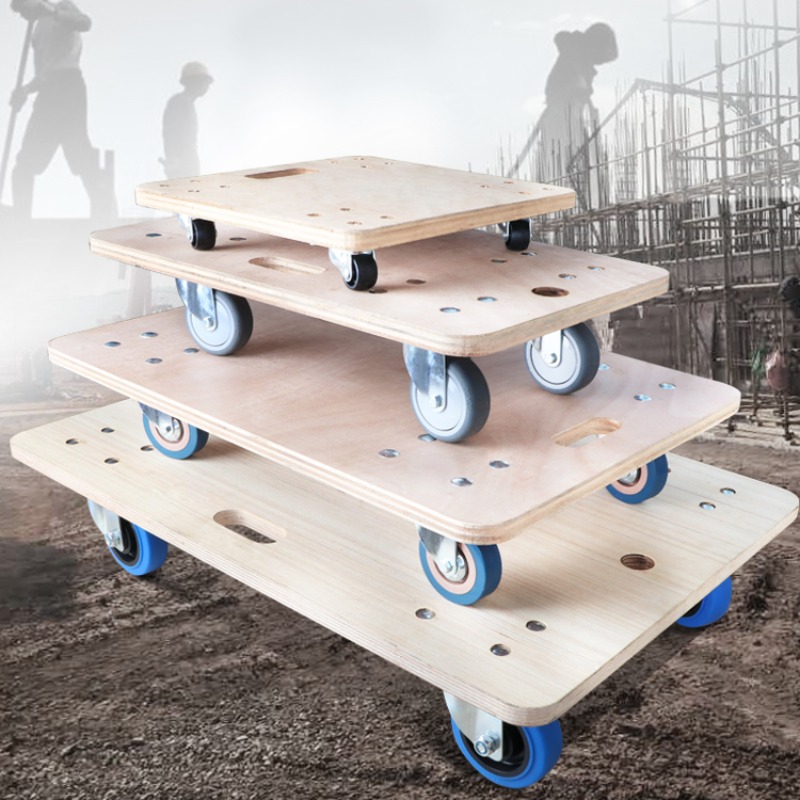
Commercial and retail settings: Aesthetics matter alongside function. Wooden platform trolleys built from solid multi-layer log materials handle this environment well. MINSEN's folding solid wood hand trolley combines structural integrity—with rounded corners finished by hand grinding to prevent injury—with a clean appearance suited to customer-facing areas.
Food processing and pharmaceutical: Chemical and moisture resistance become non-negotiable. Stainless steel frames and PU or nylon wheels prevent rust contamination and withstand regular washdown. MINSEN's stainless steel trolley series is engineered specifically for these demands.
What should procurement teams evaluate when comparing trolley suppliers?
The lowest unit price rarely reflects the lowest total cost of ownership. Procurement teams that focus exclusively on per-unit cost consistently end up replacing equipment ahead of schedule. A more effective framework evaluates five criteria:
Manufacturing origin and quality control process — Is the product made in a controlled factory environment with traceable materials and inspection at each stage? MINSEN conducts 100% inspection before shipment.
MOQ flexibility — Facilities with diverse needs require suppliers who can fill varied order quantities. MINSEN's minimum orders typically range from 100 to 1,000 units depending on product type.
Customization capability — Standard catalog products rarely fit every application perfectly. OEM and ODM readiness indicates a manufacturer with genuine engineering depth.
After-sales support — Fast response when equipment fails in a live facility is worth paying for upfront.
Lead time reliability — Consistent delivery timing matters more than occasional speed.
For a deeper breakdown of sourcing decisions across product types, the hand trucks and trolleys B2B sourcing guide from MINSEN covers selection criteria across the full range of material handling equipment.
Smarter Trolley Sourcing Starts with the Right Manufacturer
The gap between productive and inefficient material handling often comes down to decisions made during procurement. A trolley that's too light fails under real loads. Wheels that aren't suited to the floor type wear out in months. Frames without proper reinforcement bend under repeated use—and the facility absorbs that cost in downtime and replacement cycles.
MINSEN, established in 2010 with over 15 years of manufacturing experience, builds trolleys and casters across the full spectrum of industrial and commercial requirements. With end-to-end production control, an 8,000 m² manufacturing facility, and direct-to-buyer supply, MINSEN delivers consistent quality without middleman markup.
Contact MINSEN at sales@mingtaicaster.com to discuss your facility's specific requirements and request product samples or a custom quotation.
Frequently Asked Questions
What is the difference between a platform trolley and a hand truck for industrial use?
A platform trolley features a flat deck supported by four wheels, distributing load across a horizontal surface. A hand truck uses an L-shaped frame with two wheels, tilting to move loads vertically. Platform trolleys suit flat, heavy, or bulky loads; hand trucks work better for stacked boxes or upright items in confined spaces.
How do I calculate the correct load rating when sourcing industrial trolleys?
Divide the maximum expected cart weight by the number of wheels minus one to determine the per-wheel load requirement. Then apply a 20–30% safety buffer above your calculated maximum. This ensures the equipment operates within safe limits even under uneven load distribution.
Can MINSEN produce custom trolleys for specific facility requirements?
Yes. MINSEN accepts OEM and ODM orders, covering custom dimensions, platform materials, wheel specifications, and surface finishes. Contact the MINSEN sales team directly to discuss your application and initiate the customization process.
What wheel material is best for a facility with sensitive floors?
Polyurethane (PU) and natural rubber wheels cause the least floor damage and generate the lowest noise levels. Both are suitable for polished concrete, epoxy-coated floors, and tile surfaces. Avoid nylon or steel wheels on sensitive surfaces unless load requirements make them necessary.
What is the minimum order quantity for MINSEN trolleys?
Minimum order quantities typically range from 100 to 1,000 units, depending on the specific product. Contact MINSEN directly for exact MOQ information on the models relevant to your procurement needs.