Choosing the wrong caster doesn't just slow down operations—it creates real safety hazards. Overloaded wheels crack, seize, or fail without warning, putting workers and equipment at risk. For factory managers and procurement teams sourcing industrial mobility solutions, understanding load ratings is the first step toward making smart, lasting decisions.
This guide breaks down how caster weight capacity works, what factors affect it, and how to match the right wheel to your specific environment. It also highlights where MINSEN's heavy-duty caster range fits into the equation for factories that demand consistent, high-load performance.
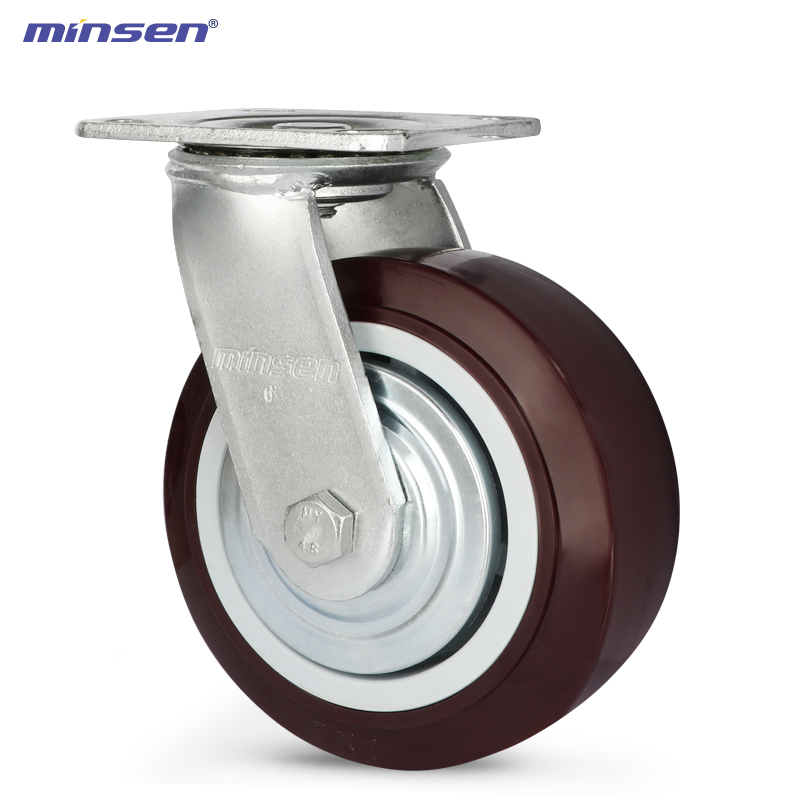
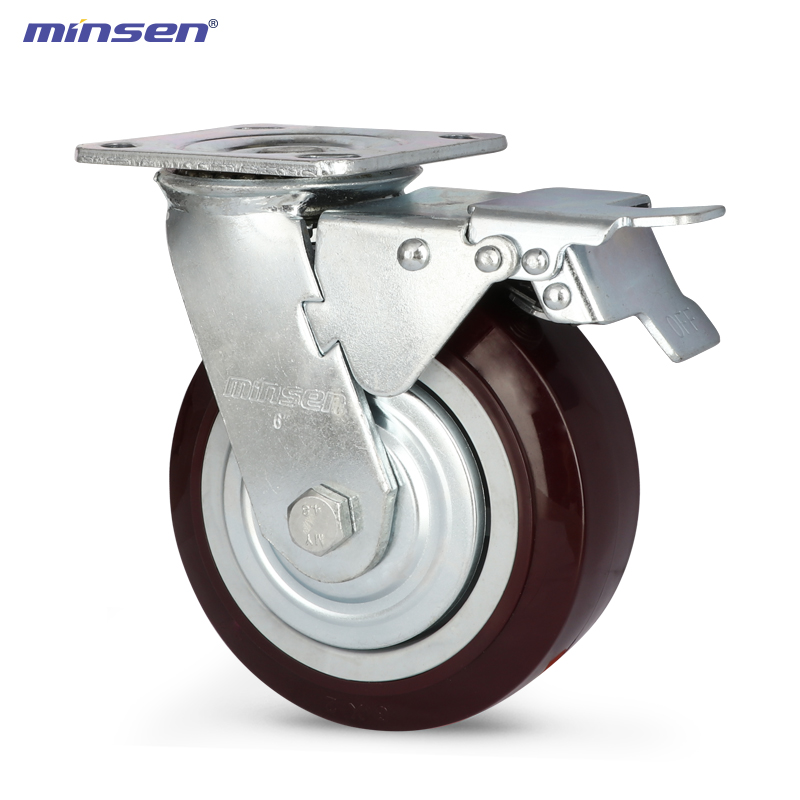
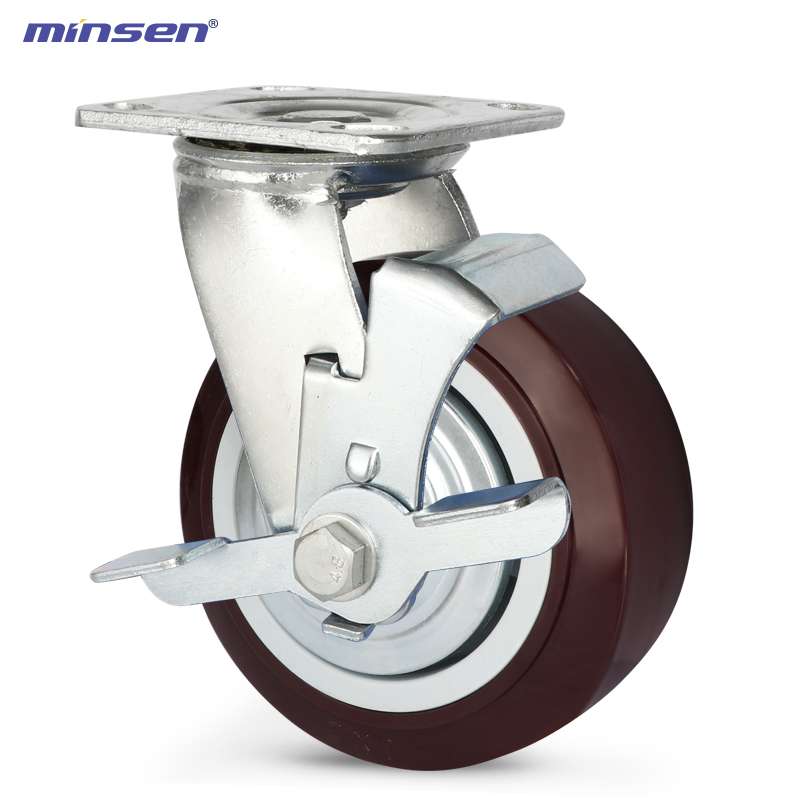
Why Load Rating Is More Than Just a Number
Every caster comes with a rated load capacity—the maximum weight one wheel can safely support. But that number alone doesn't tell the full story. In real factory settings, load is distributed unevenly across four casters, floors are rarely perfectly smooth, and equipment accelerates, stops, and turns constantly.
Those dynamic conditions dramatically reduce how much weight each caster can handle safely. A reliable caster wheel weight capacity guide should account for both static load (the weight of equipment sitting still) and dynamic load (the force generated during movement).
The standard rule across the industry: divide the total equipment weight by the number of casters, then multiply by a safety factor—typically 1.3 to 1.5—to arrive at the minimum capacity each wheel should be rated for.
How to Calculate the Right Load Capacity
Before purchasing, run through this calculation:
Formula:Required capacity per caster = (Total load ÷ Number of casters) × Safety factor
For example, a 2,000 kg cart on four casters requires each wheel to handle at least 500 kg × 1.4 = 700 kg per caster minimum.
The table below shows how safety factors vary by application type:
Application Type | Recommended Safety Factor | Notes |
Light-duty office/retail | 1.2 | Smooth floors, low speed |
Medium-duty warehouse | 1.3 | Occasional ramps or thresholds |
Heavy-duty factory/assembly | 1.4–1.5 | Vibration, uneven floors |
Extra-heavy industrial | 1.5–2.0 | High-impact or automated lines |
High-temperature environments | 1.5+ | Heat reduces material strength |
Skipping this calculation is one of the most common mistakes buyers make. A caster rated at 500 kg does not mean it can safely handle 500 kg in all factory conditions—it means it can under controlled, static circumstances.
Key Factors That Affect Capacity in Practice
Several variables can reduce effective load capacity below the rated figure:
Floor condition: Cracked, uneven, or debris-covered floors amplify shock loads on every rotation
Travel speed: Faster movement multiplies the dynamic force on wheel bearings
Swivel radius: Tight turns create lateral stress that standard ratings don't always reflect
Temperature: High-heat environments weaken certain materials, particularly standard rubber and some plastics
Frequency of use: Continuous operation wears bearings faster than intermittent use
When evaluating how to choose heavy duty caster wheels for factory use, these variables matter as much as the printed rating. A wheel that performs well in a climate-controlled warehouse may fail quickly on a foundry floor.
Wheel Material and Its Impact on Weight Handling
Wheel material directly determines load performance, floor compatibility, and lifespan under stress. Here's a comparison:
Wheel Material | Load Range | Best For | Floor Impact |
Polyurethane (PU) | Medium–High | Warehouses, logistics | Low—protects floors |
Nylon | High | Factories, assembly lines | Moderate |
Cast iron | Very high | Foundries, heavy manufacturing | High—can damage soft floors |
Rubber | Low–Medium | Quiet or sensitive environments | Very low |
High-temp resistant | High | Ovens, heat-treatment zones | Moderate |
For most factory environments, polyurethane and nylon wheels offer the best balance of load capacity and floor protection. Cast iron handles the heaviest loads but requires flat, hard floor surfaces.
MINSEN Casters manufactures wheels across all of these categories—including a dedicated Extra Heavy Duty Series and High Temperature Resistant Series—designed specifically for demanding industrial conditions. Factory-direct supply means no distributor markup, which matters when sourcing at volume.
Matching Caster Specs to Factory Environments
Not every factory floor is the same, and neither are its caster requirements. An automotive assembly plant has different demands than a food processing facility or a metal fabrication workshop.
The best heavy duty casters for factory environments combine the right wheel material with appropriate bracket strength, bearing type, and swivel design. A heavy-duty swivel caster with a forged steel bracket, sealed ball bearings, and a nylon or PU wheel covers the majority of high-load factory applications.
MINSEN's Industrial Caster Series is built to handle exactly these conditions. Each unit goes through multiple tests for wear resistance, load-bearing, and rotation before leaving the factory. With over 10 years of manufacturing experience and an 8,000 m² production facility in Kaiping, Guangdong, MINSEN has the capacity to deliver consistent quality whether the order is 100 units or 10,000.
For specialized environments—such as ESD-sensitive electronics production or high-temperature kilns—MINSEN also offers antistatic casters and heat-resistant series rated for up to 310°C.
Avoiding the Most Common Sizing Mistakes
Even experienced procurement teams make avoidable errors. Here's what to watch for:
Undersizing by ignoring the safety factor: Always multiply calculated load by at least 1.3
Choosing the wrong material for the floor type: PU on a rough concrete floor wears down quickly; nylon handles it better
Overlooking the bracket rating: A strong wheel paired with a weak bracket still fails under heavy load
Ignoring environment: Standard casters degrade rapidly in high-heat or corrosive chemical environments
Buying on price alone: Cheap casters that fail frequently cost far more in downtime and replacement than quality units
MINSEN supports customers through this process with multi-spec customization options and responsive technical consultation—making it easier to match the right product to the right application from the start.
Making the Right Call for Long-Term Performance
Weight capacity is the foundation of any smart caster selection, but it's only one part of the decision. Floor type, environment, movement frequency, and bracket quality all shape how well a caster performs over time.
For factory operations that cannot afford unexpected downtime, investing in properly rated, well-built heavy-duty casters pays off quickly. MINSEN Casters offers factory-direct pricing, OEM customization, and a full product range—from medium-duty universal wheels to extra-heavy industrial series—backed by a strict quality control process at every stage of production.
Contact the MINSEN team to discuss your load requirements, floor conditions, and production environment. Getting the specs right before purchase is always faster than replacing failed equipment mid-operation.